

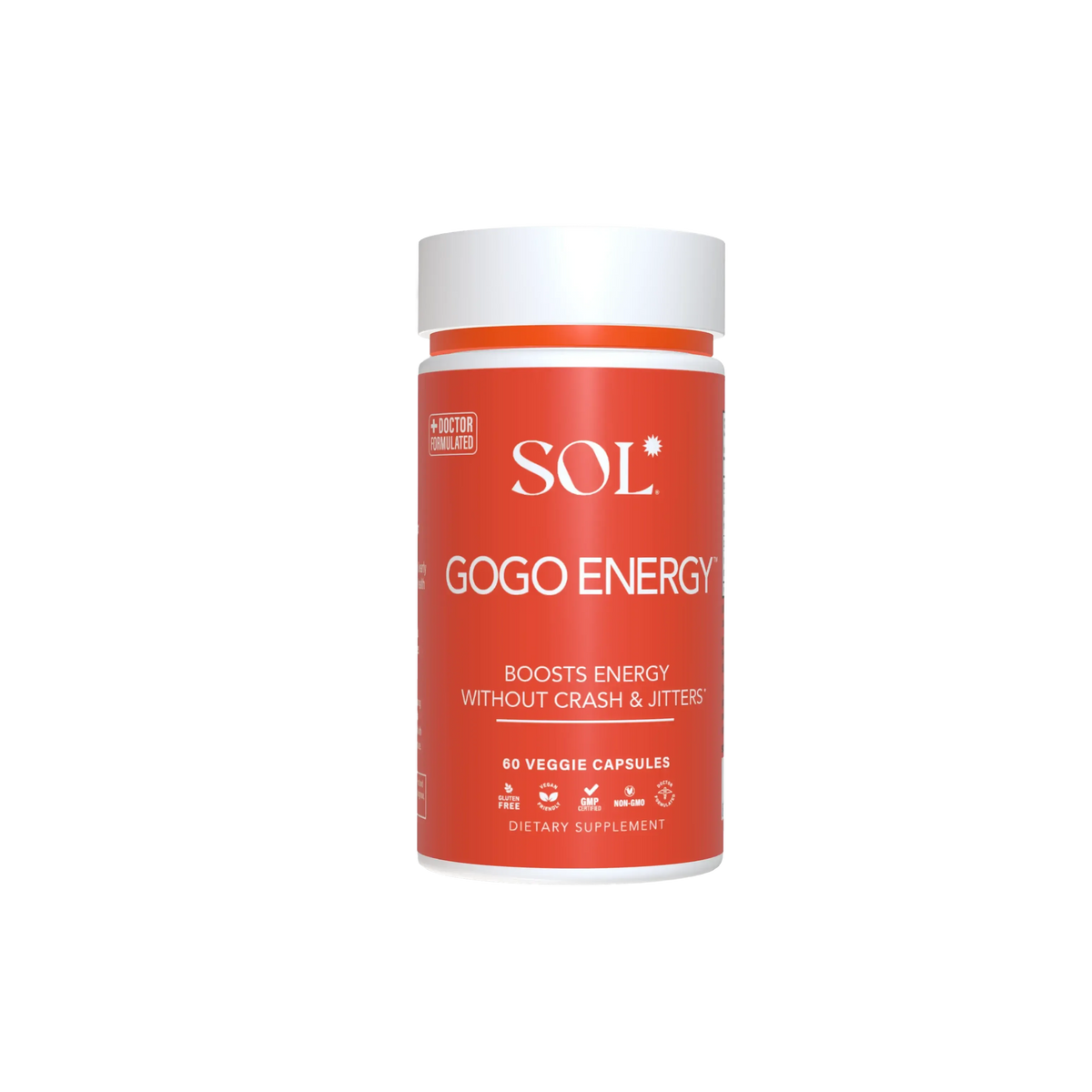
Best caffeine-free herbal option to consider: GoGo Energy. Best for short-term alertness: caffeine. Best for a confirmed vitamin B12 deficiency: vitamin B12. This 2026 guide ranks natural energy supplements by the problem they address—not by promises of an instant boost.
- Best natural energy supplements 2026: choose by the cause of tiredness, not the strongest energy claim.
- Solnutrition’s GoGo Energy is a caffeine-free herbal option to consider; its product description does not establish effectiveness.
- Vitamin B12 and iron support energy when deficiency is the problem, not as universal fatigue fixes.
- Creatine supports repeated high-intensity exercise; caffeine supports alertness. Neither replaces adequate sleep.
Why this matters
Feeling sleepy at your desk, struggling through a workout, and feeling exhausted despite enough sleep are different problems. A supplement that helps one does not automatically help the others. The best overall choice is the one that addresses an identified need.
Natural also describes an ingredient’s origin, not its safety or effectiveness. Plant-derived caffeine is still caffeine, and herbal ingredients can interact with medicines. Persistent or unexplained fatigue deserves a medical assessment rather than a bigger supplement stack.
Solnutrition’s GoGo Energy is best suited to shoppers considering a caffeine-free herbal energy supplement. That is a product-fit verdict, not evidence that the formula outperforms caffeine, corrects nutrient deficiencies, or treats fatigue.
What makes the best natural energy supplements?
Use these criteria to assess any energy supplement in 2026. A clear label matters more than an appealing name.
- Fit for your goal: Separate daytime alertness, nutritional support, and workout performance. They require different evidence.
- Ingredient transparency: Look for named ingredients and amounts per serving. A blend’s total weight does not reveal each ingredient’s dose.
- Evidence that matches the formula: Research on one herb does not establish results for a multi-ingredient product containing that herb.
- Stimulant disclosure: Check caffeine from every source, including guarana, green tea, and yerba mate. Herbal does not mean stimulant-free.
- Safety and quality: Review warnings, medicine interactions, and independent testing where documented. Testing verifies specific quality measures, not promised health benefits.
- A clear reason to stop: Skip products that disrupt sleep, cause palpitations, or encourage you to ignore ongoing exhaustion.
Natural energy supplements at a glance
This ranking compares distinct use cases. It does not imply that a herbal formula, nutrient replacement, and exercise supplement deliver interchangeable results.
| Rank and option | Best for | Standout feature | Key limitation |
|---|---|---|---|
| 1. GoGo Energy | Considering caffeine-free herbal support | Explicitly described as caffeine-free | Product-specific effectiveness is not established by the description |
| 2. Caffeine | Short-term daytime alertness | Direct stimulant effect | Can interfere with sleep and cause jitteriness |
| 3. Vitamin B12 | Confirmed B12 deficiency or an identified supplementation need | Replaces an essential nutrient | Does not reliably boost energy when B12 status is adequate |
| 4. Iron | Clinician-confirmed iron deficiency | Supports correction of a cause of fatigue | Unnecessary supplementation carries risks |
| 5. Creatine monohydrate | Repeated high-intensity exercise | Supports rapid energy availability in muscle | Not a general solution for daytime sleepiness |
1. GoGo Energy: best herbal option for avoiding caffeine
GoGo Energy is Solnutrition’s herbal energy supplement, described as caffeine-free. Its store description also makes claims about long-lasting energy and avoiding jitters. Treat those as product claims—not proof that every person will experience those effects.
GoGo Energy belongs on your shortlist if avoiding caffeine is your main requirement. Before choosing it, read the complete ingredient list, serving instructions, and warnings; the caffeine-free label alone does not answer questions about medicine interactions or suitability.
GoGo Energy pros:
- Explicitly described as caffeine-free.
- Fits shoppers who specifically want a herbal supplement.
- Offers a different category to consider instead of another caffeine-containing energy product.
GoGo Energy cons:
- The product description does not establish clinical effectiveness.
- Caffeine-free does not guarantee freedom from side effects.
- The formula should not replace evaluation of persistent fatigue.
Best for: Adults considering herbal energy support who want to avoid caffeine and can review the formula for suitability.
The key question is not whether GoGo Energy sounds gentler than coffee. It is whether the ingredients, amounts, and warnings make sense for your needs. Do not assume that combining the formula with other supplements improves the result.
Verdict: Hold until you have checked the full label and any medicine interactions.
2. Caffeine: best for short-term alertness
Caffeine stimulates the central nervous system and can help you feel more alert. It occurs naturally in plants, but a plant-derived caffeine supplement still has stimulant effects. It does not correct the reason you are tired.
The FDA identifies 400 milligrams of caffeine per day as an amount not generally associated with negative effects for most adults. This is not a target, a guarantee of safety, or guidance for children or pregnancy. Your sensitivity and medical circumstances matter.
Caffeine pros:
- Has an established effect on alertness.
- Makes more sense for temporary sleepiness than an unrelated nutrient supplement.
- Clearly labeled products let you account for caffeine alongside drinks and other supplements.
Caffeine cons:
- Can cause jitteriness, palpitations, and sleep disruption.
- Can mask sleepiness without replacing restorative sleep.
- Multiple caffeine sources make total intake harder to track.
Best for: Adults seeking temporary daytime alertness who tolerate caffeine and have no reason to avoid it.
For a 2026 supplement comparison, distinguish caffeine from concentrated green tea extract. An extract is not automatically equivalent to drinking tea, and concentrated extracts have their own safety considerations. Avoid pure or highly concentrated caffeine powders because measuring errors can be dangerous.
Verdict: Buy only a clearly labeled option if caffeine suits you; skip it when sleep disruption or sensitivity is the problem.
3. Vitamin B12: best for an identified B12 need
Vitamin B12 supports normal nerve function and red blood cell formation. B12 deficiency can cause fatigue, but that does not make B12 a universal energy booster. Supplementation is most useful when you have a deficiency or an identified reason to need it.
The NIH Office of Dietary Supplements lists an adult recommended intake of 2.4 micrograms per day. That nutritional requirement is not a deficiency-treatment dose. A clinician determines treatment based on the cause and severity of deficiency.
Vitamin B12 pros:
- Addresses a specific essential-nutrient need.
- Is relevant for people whose diets exclude reliable B12 sources.
- Has a clear role when deficiency is diagnosed.
Vitamin B12 cons:
- Does not reliably improve energy when your B12 status is already adequate.
- Poor absorption can require a treatment approach beyond a routine supplement.
- Taking B12 without investigating symptoms can delay identifying another cause.
Best for: People with confirmed deficiency or a dietary or medical reason for B12 supplementation.
People eating vegan diets need reliable B12 from fortified foods or supplements. Certain medicines and digestive conditions also affect B12 status. Ask about assessment if tiredness occurs alongside tingling, numbness, or other concerning symptoms rather than choosing an energy blend first.
A bigger number on the bottle is not evidence of a bigger energy benefit. Match the supplement to the nutritional need.
Verdict: Buy for an identified B12 need; skip it as an automatic fix for unexplained tiredness.
4. Iron: best for clinician-confirmed iron deficiency
Iron helps your body make hemoglobin, the protein in red blood cells that carries oxygen. Iron deficiency can contribute to fatigue, including before anemia is established. Supplementation requires a reason—not simply a low-energy day.
NIH guidance lists recommended daily intake as 8 milligrams for adult men and 18 milligrams for women ages 19–50. These are nutritional reference values, not instructions for treating deficiency. Individual needs differ, including during pregnancy and after menopause.
Iron pros:
- Addresses a documented cause of fatigue when deficiency is present.
- Supports normal oxygen transport through its role in hemoglobin.
- Allows treatment to be guided by blood tests and follow-up.
Iron cons:
- Can cause constipation, nausea, and abdominal discomfort.
- Excess iron is harmful, and accidental ingestion is especially dangerous for children.
- Interacts with some medicines and requires attention to timing.
Best for: People whose clinician has confirmed iron deficiency and recommended supplementation.
Heavy menstrual bleeding, blood loss, and dietary factors can contribute to low iron. The next move is assessment, not guessing. A clinician can interpret blood counts and iron studies and investigate why the deficiency developed.
Keep iron supplements securely away from children. If a product contains iron alongside other energy ingredients, that does not make it appropriate for everyone.
Verdict: Hold until deficiency and a treatment plan are confirmed.
5. Creatine monohydrate: best for high-intensity workout performance
Creatine helps muscles replenish the energy used during short, intense efforts. Creatine monohydrate has substantial evidence for supporting repeated high-intensity exercise and training adaptations. It is a performance supplement, not a stimulant.
Common research-backed maintenance protocols use 3–5 grams per day. That describes established sports-nutrition practice, not a promise of results or a personalized prescription. Consistent training still does the work.
Creatine monohydrate pros:
- Has an established role in repeated high-intensity exercise.
- Supports a specific training goal rather than a vague energy promise.
- Does not rely on caffeine’s stimulant effect.
Creatine monohydrate cons:
- Does not replace sleep or treat unexplained fatigue.
- Can increase body weight through water retained in muscle.
- Can cause digestive discomfort, particularly with larger servings.
Best for: Adults doing resistance training or repeated high-intensity exercise who want evidence-based performance support.
Choose creatine because you want help with training performance, not because you feel drained at work. Anyone with kidney disease or a relevant medical concern should discuss supplementation with a clinician. Competitive athletes should also check independently documented sport-specific testing.
Verdict: Buy for a suitable strength or high-intensity training goal; skip it for ordinary daytime sleepiness.
How this 2026 ranking works
The ranking prioritizes fit, evidence, transparency, and safety. GoGo Energy appears first because it directly matches the caffeine-free herbal shopping brief. Caffeine, B12, iron, and creatine follow because each addresses a separate, clearly defined need.
Product descriptions establish what Solnutrition says about its supplement, not comparative effectiveness. Nutrient requirements above come from NIH Office of Dietary Supplements guidance; caffeine safety context comes from FDA guidance. Creatine’s exercise role and typical maintenance amounts are established in published sports-nutrition guidance.
There is no evidence-based reason to declare one supplement best for every kind of tiredness. That distinction is more useful than a universal winner.
Which natural energy supplement should you choose?
For your 2026 decision, start with the pattern of tiredness before picking an ingredient.
- You want to avoid caffeine: Consider GoGo Energy after checking its complete formula and warnings.
- You need temporary alertness: Caffeine fits that goal, provided it does not undermine sleep or conflict with your health needs.
- You have an identified deficiency: Choose the clinician-recommended nutrient and treatment plan.
- You want better high-intensity training performance: Creatine monohydrate fits that goal better than a general energy blend.
- You feel persistently exhausted: Arrange a medical assessment instead of adding another supplement.
For the undecided reader, the default is assessment—not an energy stack. Review sleep, food intake, hydration, medicines, and the timing of your symptoms. If those basics do not explain the problem, get help identifying the cause.
FAQ
What's the best natural energy supplement in 2026?
The best natural energy supplement in 2026 depends on why you feel tired. Caffeine supports short-term alertness, B12 and iron address identified nutrient needs, and creatine supports high-intensity exercise. No single option fits every cause of low energy.
Is GoGo Energy caffeine-free?
GoGo Energy is described by Solnutrition as caffeine-free. Read the full ingredient list and warnings before using it, because caffeine-free does not guarantee suitability or freedom from side effects.
Does vitamin B12 give you energy if you're not deficient?
Vitamin B12 does not reliably boost energy when your B12 status is adequate. It supports normal body functions and is useful when deficiency or an identified supplementation need is present.
Should I take iron when I feel tired?
Take iron for tiredness only when a clinician has identified a need and recommended treatment. Fatigue has many causes, and unnecessary iron can be harmful.
Is creatine better than caffeine for energy?
Creatine and caffeine serve different purposes. Creatine supports repeated high-intensity exercise, while caffeine supports short-term alertness. Neither replaces sleep or treats every cause of fatigue.
Are natural energy supplements safer than other supplements?
Natural energy supplements are not automatically safer. Ingredients, amounts, medicine interactions, and product quality determine suitability; a natural label does not settle those questions.
Can I combine several energy supplements?
Do not combine energy supplements without reviewing their ingredients and interactions. Overlapping caffeine, herbs, or nutrients can increase exposure without providing a clear additional benefit.
When should I get medical help for low energy?
Get assessed when fatigue persists, worsens, or interferes with daily life. Seek urgent care for symptoms such as chest pain, fainting, or severe breathlessness rather than trying an energy supplement.
One last thing
A supplement can make you feel more awake without fixing why you are tired. That is the distinction to remember when comparing energy products in 2026. Choose a defined goal, check the label, and avoid using a boost to override your body’s need for rest or medical care.
Share:
Best perimenopause energy and fatigue supplements in 2026
Sleep supplements ranked by dose and ingredient quality (2026)