

Best for body-clock timing: melatonin. Best for addressing low magnesium intake: magnesium. Best overall: no supplement wins across every sleep problem. This 2026 guide ranks sleep-support options by their fit, dose transparency, and ingredient quality—not by how many ingredients fit on a label.
- The best sleep supplements ranked by dose and quality start with your sleep problem, not the largest serving.
- Melatonin fits body-clock timing problems; it is not a default treatment for chronic insomnia.
- Magnesium fits nutritional needs better than a blanket promise of deeper sleep.
- Solnutrition Sleep Deeply needs a full label review before a dose or ingredient-quality verdict.
Why this matters
A sleep supplement can have a clear label and still be the wrong choice for you. Trouble falling asleep after travel, waking with hot flashes, and lying awake with persistent worry are different problems. Treating them as one shopping category hides the decision that matters most.
For adults, the American Academy of Sleep Medicine and Sleep Research Society recommend at least 7 hours of sleep regularly. That is a sleep-duration recommendation, not a promise that a capsule will deliver it. If your schedule leaves too little time for sleep, adding a supplement does not create that time.
When considering Solnutrition sleep supplements in 2026, start with your symptoms and the complete Supplement Facts panel. A product name, an herbal positioning statement, or a larger dose cannot establish effectiveness or quality.
What makes the best sleep supplements?
Use these criteria before comparing the options below. A bigger dose is not a better quality score.
- Problem fit: Identify whether the issue is sleep timing, nutritional intake, evening tension, or persistent insomnia.
- Dose transparency: Look for each ingredient's amount per serving, plus the number of capsules that make that serving.
- Ingredient identity: Check the chemical form for minerals and the botanical name, plant part, and preparation for herbs.
- Relevant evidence: Favor research on the same ingredient, preparation, and sleep problem—not merely a related ingredient.
- Quality verification: Look for identifiable independent testing or accessible batch information. Manufacturing language alone does not prove the contents of a particular bottle.
- Safety fit: Review medicines, other supplements, pregnancy or breastfeeding, medical conditions, and next-day responsibilities before choosing.
These criteria separate three questions that advertising often blends together: what is in the bottle, whether that ingredient fits your need, and whether it is safe for you. A convincing answer to one does not settle the others.
Sleep supplements at a glance
The 2026 order below ranks use-case fit and assessability, not tested products or verified manufacturing quality. The branded option remains on hold until its complete label can be assessed.
| Rank and option | Best for | Standout assessment point | Key limitation |
|---|---|---|---|
| 1. Melatonin | Body-clock timing problems | A clearly stated amount supports a timing-specific discussion | Not a default treatment for chronic insomnia |
| 2. Magnesium | Addressing low magnesium intake | Elemental magnesium makes the dose interpretable | Sleep benefits are not established for everyone |
| 3. L-theanine | Reviewing a single-ingredient relaxation option | A single-ingredient label avoids hidden blend amounts | Sleep evidence is limited |
| 4. Valerian | Comparing botanical identity and preparation | Plant part and extract details help distinguish formulas | Evidence for insomnia is inconsistent |
| 5. Sleep Deeply | Reviewing a branded sleep-support option | Its complete label is the starting point for assessment | No dose or ingredient-quality ranking without that review |
The ranking does not make every option a recommendation to buy. Hold means you need a clearer reason or more information; Skip means the option is not a good default for the stated goal.
1. Melatonin: best sleep supplement for body-clock timing
Melatonin is a hormone involved in the body's sleep-wake timing. Its strongest practical distinction in this comparison is that timing matters—not just the amount you take. Jet lag and a shifted sleep schedule are different from chronic insomnia.
The CDC Yellow Book 2026, in its guidance for travelers with jet lag, states that 0.5–1 mg is often sufficient to produce a shift in circadian timing. That range applies to a specific travel-related use; it is not a universal nightly dose recommendation. Taking more does not automatically improve that fit.
Melatonin pros:
- Has a clear body-clock-related purpose.
- Can be assessed by amount per serving rather than blend weight.
- Has public guidance for a defined use case: jet lag.
Melatonin cons:
- Incorrect timing can work against the intended schedule shift.
- Can cause drowsiness and requires an interaction review.
- Does not address every cause of nighttime waking.
Best for: Adults discussing jet lag or a shifted sleep schedule with a qualified clinician or pharmacist.
Verdict: Hold until timing and suitability are clear. Melatonin ranks first for a defined timing problem, not as the best sleep supplement for everyone.
2. Magnesium: best sleep supplement for low-intake concerns
Magnesium is an essential mineral, not a sleep-specific sedative. A nutritional reason to use it is different from evidence that it will improve sleep in someone whose intake is already adequate. Keep those claims separate.
Read the elemental magnesium amount in the Supplement Facts panel. The weight of a magnesium compound is not interchangeable with the amount of magnesium it supplies. A front-label claim about a compound can therefore make comparisons confusing.
The NIH Office of Dietary Supplements lists an adult upper limit of 350 mg per day from supplements and medications. That limit excludes magnesium naturally present in food, and it is not a recommended sleep dose. Clinician-directed treatment can require a different approach.
Magnesium pros:
- Addresses a genuine nutrient need when one is identified.
- Provides an interpretable dose when elemental magnesium is disclosed.
- Lets you compare mineral forms separately from sleep claims.
Magnesium cons:
- Supplemental magnesium can cause diarrhea and abdominal discomfort.
- Kidney disease requires particular caution.
- A named form does not establish superior sleep results.
Best for: Adults reviewing inadequate magnesium intake or a clinician-identified need.
Verdict: Hold unless there is a nutritional reason to use magnesium. Do not choose it solely because a label promises better sleep.
3. L-theanine: best for a single-ingredient relaxation review
L-theanine is an amino acid found in tea and sold in supplements. It is studied for relaxation and sleep-related outcomes, but those findings do not establish it as a treatment for chronic insomnia. Feeling calmer and sleeping better are related goals, not identical outcomes.
A single-ingredient L-theanine product is easier to assess than a blend that hides its amount. That is an advantage in label transparency, not proof of effectiveness. A transparent label still needs evidence relevant to your goal.
L-theanine pros:
- A single-ingredient format makes the serving amount easy to identify.
- Avoids attributing a blend's effects to an undisclosed ingredient amount.
- Allows a focused discussion about relaxation rather than broad sleep promises.
L-theanine cons:
- Sleep research is limited and does not establish a universal effective dose.
- Relaxation claims do not prove better sleep duration or quality.
- Combining it with other sleep products complicates safety assessment.
Best for: Adults reviewing a relaxation-focused option with a clinician, rather than seeking treatment for persistent insomnia.
Verdict: Hold. Choose transparency over a complex blend, but do not mistake a readable label for strong clinical evidence.
4. Valerian: best for comparing botanical preparations
Valerian is an herb used in sleep-support products. Different preparations are not automatically equivalent: plant part, extraction method, and standardization can differ. A milligram amount without those details gives you an incomplete comparison.
NCCIH's public guidance on valerian describes inconsistent evidence for sleep benefits. The American Academy of Sleep Medicine's guideline on pharmacologic treatment of chronic insomnia advises against valerian for that purpose. Traditional use does not override that evidence gap.
Valerian pros:
- Detailed botanical labeling allows a more meaningful formula comparison.
- A clearly identified preparation can be checked against relevant research.
- A single-herb formula is easier to assess than an undisclosed blend.
Valerian cons:
- Insomnia evidence is inconsistent.
- Different extracts cannot be ranked by milligrams alone.
- Combining valerian with alcohol or other sedating substances raises safety concerns.
Best for: Readers learning how to assess herbal identity and extract details—not choosing a default insomnia treatment.
Verdict: Skip as the default for chronic insomnia. An herbal ingredient still needs a specific reason, a clear label, and a safety review.
5. Sleep Deeply: best for a branded sleep-label review
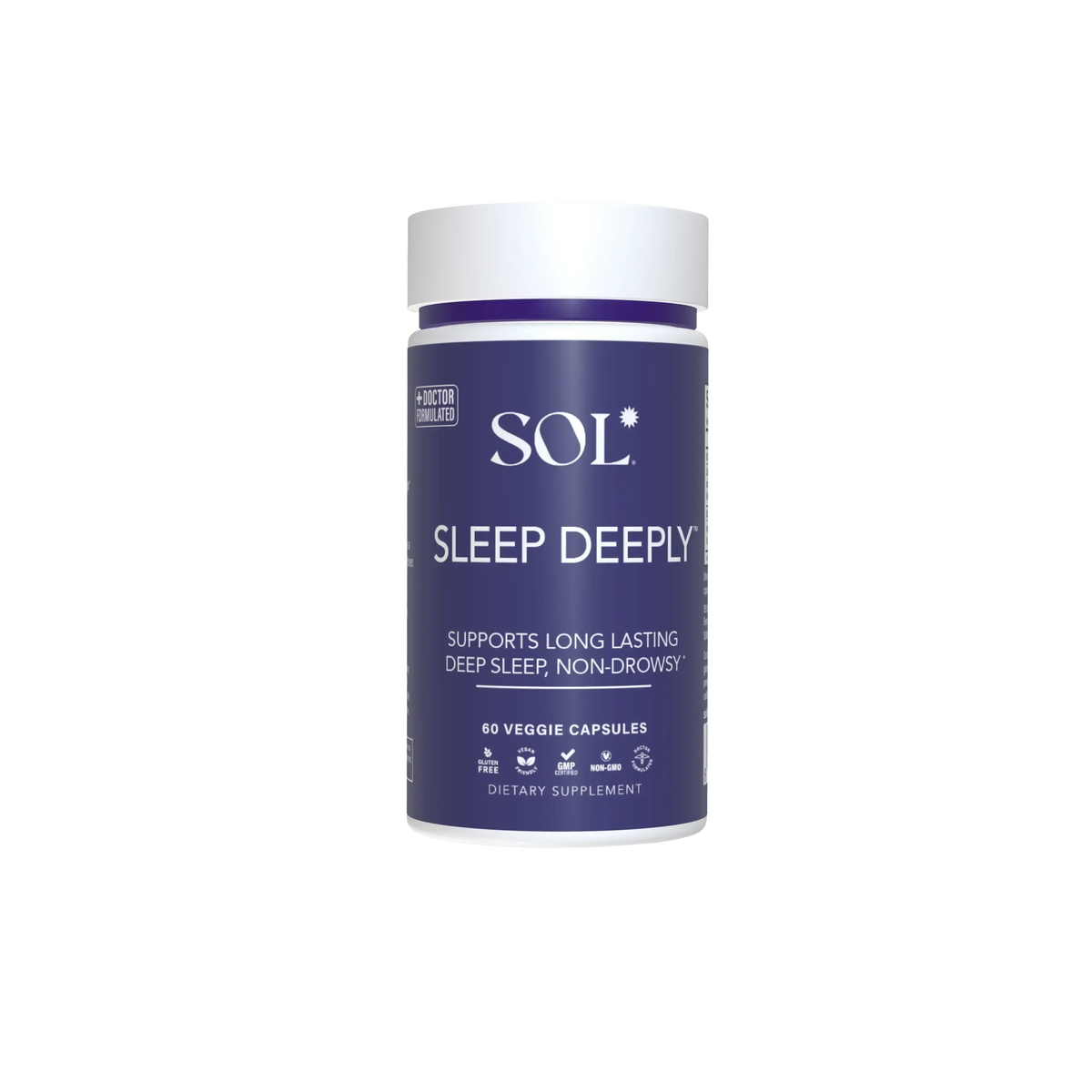
Sleep Deeply is a Solnutrition sleep-support product. Before assigning it a dose or ingredient-quality score, inspect its current Supplement Facts panel, directions, warnings, and any available testing documentation. Product positioning alone does not establish those details.
For shoppers considering Solnutrition sleep supplements, Sleep Deeply is a label-review candidate, not a verified dose-quality winner. That distinction protects the decision: a quality ranking needs ingredient amounts and identity, while a safety decision needs your own health context.
Sleep Deeply pros:
- Provides a specific branded option to investigate rather than an unnamed blend.
- Has a sleep-focused product positioning.
- Offers a starting point for a product-specific discussion with your pharmacist.
Sleep Deeply cons:
- No ingredient-dose comparison is justified without the complete label.
- Product-level testing must be verified rather than assumed.
- A sleep-support claim does not establish suitability for persistent insomnia.
Best for: Wellness-focused adults considering this branded option and willing to review its actual formulation before deciding.
Verdict: Hold until the label and safety review are complete. Do not infer ingredients, serving amounts, or next-day effects from the product name.
How to compare dose and ingredient quality in 2026
Put the complete labels side by side. First check the serving size, then the individual ingredient amounts, then the form or preparation. This order prevents you from comparing one capsule with an entire multi-capsule serving.
For minerals, compare the elemental amount. For herbs, compare the botanical identity and preparation. For blends, check whether every active ingredient has an individual amount; a total blend weight cannot tell you how much of each ingredient you receive.
Ask these questions before deciding:
- Serving size: Are you comparing equivalent servings?
- Individual amounts: Can you identify every active ingredient's dose?
- Ingredient form: Does the label identify the mineral form or herbal preparation?
- Testing details: Can you identify what was tested and by whom?
- Safety review: Does the formula fit your medicines and health conditions?
Independent testing helps evaluate identity, contaminants, or label accuracy within its stated scope. It does not prove that a supplement improves sleep. Keep manufacturing quality and clinical benefit in separate columns when making your decision.
How this ranking works
This 2026 ranking gives priority to a clear use case, an interpretable dose, relevant evidence, and a manageable safety assessment. It does not assign unsupported scores to bottles, certify manufacturers, or treat marketing descriptions as complete formulations.
Melatonin leads for timing-specific problems. Magnesium follows for nutritional assessment. L-theanine and valerian require more caution about sleep claims, while Sleep Deeply needs a product-specific label review before a quality verdict.
Which sleep supplement should you choose?
Choose the problem before the product. A shifted body clock calls for a timing discussion; low nutrient intake calls for a nutrition review. Persistent insomnia calls for care rather than a larger supplement stack.
For chronic insomnia, cognitive behavioral therapy for insomnia, or CBT-I, is a first-line treatment recommended by the American College of Physicians. It addresses sleep-related behaviors and thoughts rather than relying on a capsule. Discuss it when sleep problems persist or interfere with daytime life.
Snoring with gasping, severe daytime sleepiness, or an urge to move your legs at night also deserves assessment. Pregnancy, breastfeeding, kidney disease, and prescription medicine use require a safety review before starting sleep supplements. Natural does not mean appropriate for every person.
If you remain undecided in 2026, hold off on buying a multi-ingredient sleep blend. Bring its full label to a pharmacist or clinician and ask whether its ingredients fit your actual sleep problem.
FAQ
What's the best sleep supplement ranked by dose and quality?
There is no universal winner across all sleep problems. Melatonin has a clearer role for body-clock timing, while magnesium belongs primarily in a nutritional assessment. Quality requires checking the specific product's label and testing.
Is a higher melatonin dose better for sleep?
A higher melatonin dose is not automatically better. The CDC Yellow Book 2026 says 0.5–1 mg is often sufficient to shift circadian timing in jet lag; that is not a universal nightly dose recommendation.
Is magnesium glycinate better than other magnesium forms for sleep?
A magnesium form's name does not establish superior sleep benefits. Compare elemental magnesium, tolerability, nutritional need, and evidence relevant to your situation rather than choosing by the form alone.
Does independent testing prove a sleep supplement works?
Independent testing does not prove that a sleep supplement works. Testing can assess identity, contaminants, or label accuracy within its stated scope, while effectiveness requires relevant clinical evidence.
Can I take several sleep supplements together?
Do not combine sleep supplements without reviewing the full combination with a pharmacist or clinician. Overlapping ingredients and sedating effects complicate safety, especially when prescription medicines or alcohol are involved.
Is Solnutrition Sleep Deeply the highest-quality option?
Sleep Deeply cannot be named the highest-quality option without reviewing its complete formulation and relevant testing information. Assess the current label, individual ingredient amounts, directions, and warnings before deciding.
When should I get help instead of buying a sleep supplement?
Get help when sleep problems persist, affect daytime functioning, or occur with gasping, loud snoring, or severe daytime sleepiness. A clinician can assess the cause and discuss treatments, including CBT-I for chronic insomnia.
One last thing
The most useful detail on a supplement bottle is often the serving size, not the largest number on the front. Before your next purchase, check whether that number describes one capsule, several capsules, a whole compound, or a combined blend.
Save a photo of the complete label and bring it to your safety review. That small step turns a vague question about a sleep supplement into a specific discussion about ingredients, amounts, and your needs.
Share:
Best natural energy supplements in 2026, ranked and compared
Best prenatal vitamins in 2026, ranked