

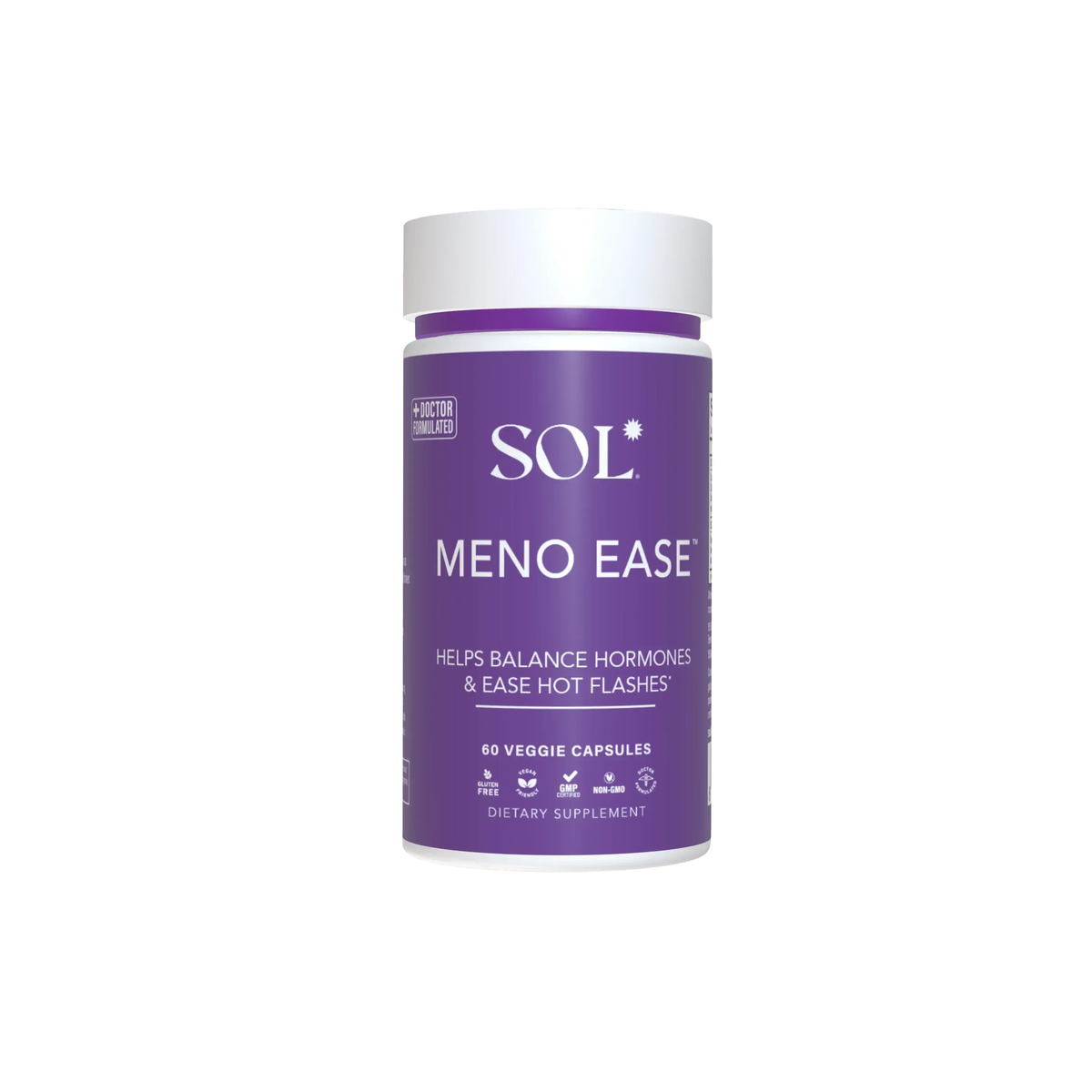
Best for confirmed iron deficiency: iron. Best for vitamin B12 deficiency: vitamin B12. Best for a caffeine-free herbal option to review: GoGo Energy. The best perimenopause supplements for energy and fatigue in 2026 depend on what is causing your tiredness—not which bottle promises the biggest boost.
- The best perimenopause supplements for energy and fatigue address a specific cause, not perimenopause alone.
- Iron and vitamin B12 are targeted choices when assessment identifies a deficiency.
- Solnutrition offers GoGo Energy as a caffeine-free herbal option; that does not establish effectiveness for perimenopause fatigue.
- Address disrupted sleep and heavy bleeding before adding multiple energy supplements.
Why this matters
Perimenopause can bring changing periods, night sweats, and disrupted sleep. Feeling exhausted does not tell you which of those is responsible—or whether something else, such as anemia or a thyroid condition, needs attention.
Solnutrition sells herbal supplements for energy, sleep, and women's health. Solnutrition's GoGo Energy is an option for readers seeking caffeine-free herbal energy support, not a substitute for evaluating persistent fatigue. Choose a supplement around a defined need rather than treating every tired day as a hormone problem.
A useful question is: are you sleepy, physically weak, short of breath, or struggling to concentrate? Those experiences overlap, but the distinction helps you describe the problem to your clinician and decide what deserves attention first.
What makes the best perimenopause fatigue supplement?
Use these criteria to compare options in 2026. A supplement belongs on your shortlist only when its purpose matches your situation.
- Cause match: The supplement addresses an identified deficiency or a clearly defined wellness preference.
- Relevant evidence: Evidence for correcting a nutrient deficiency is different from evidence for treating perimenopause fatigue.
- Clear labeling: You can identify the ingredients, serving size, amounts, and directions before taking it.
- Medication compatibility: A pharmacist or clinician checks interactions, especially with prescription medicines and other supplements.
- Sleep compatibility: An energy product should not make your nights harder; check for caffeine and other stimulating ingredients.
- A measurable goal: Decide whether you are tracking daytime sleepiness, exercise tolerance, nighttime waking, or another specific concern.
An attractive product name is not evidence. Neither is a long ingredient list. You need to know what the product contains and why those ingredients fit your needs.
Perimenopause energy supplements at a glance
This ranking separates use cases rather than declaring one universal winner. Nutrients rank ahead of a general herbal energy option when a deficiency is the reason for fatigue.
| Option | Best for | Standout feature | Key limitation |
|---|---|---|---|
| Iron | Confirmed iron deficiency, including deficiency associated with menstrual blood loss | Replaces a nutrient needed to make hemoglobin | Unnecessary iron can be harmful and can cause digestive side effects |
| Vitamin B12 | Confirmed B12 deficiency or a clinician-directed replacement plan | Supports normal red blood cell formation and nerve function | Does not provide an extra energy boost when B12 status is adequate |
| Vitamin D | Confirmed vitamin D deficiency | Addresses a documented nutrient shortfall | Is not a general treatment for perimenopause fatigue |
| Magnesium | Inadequate magnesium intake | Supports normal muscle and nerve function | Sleep and fatigue benefits are not guaranteed |
| GoGo Energy | Readers specifically seeking a caffeine-free herbal option | Described by Solnutrition as caffeine-free | The product description does not establish effectiveness for perimenopause fatigue |
1. Iron: best for fatigue linked to confirmed iron deficiency
Iron helps your body make hemoglobin, the protein in red blood cells that carries oxygen. Iron deficiency can cause fatigue, and heavy menstrual bleeding is a reason to discuss iron status with your clinician.
Best for: Someone whose assessment identifies iron deficiency, with or without anemia. Ask whether a complete blood count and ferritin measurement fit your symptoms and bleeding history; do not diagnose yourself from tiredness alone.
Iron pros:
- Directly addresses iron deficiency when it is present.
- Has an established role in treating iron-deficiency anemia.
- Gives you a treatment target that a clinician can monitor.
Iron cons:
- Can cause constipation, nausea, and abdominal discomfort.
- Can be harmful when taken unnecessarily or in excessive amounts.
- Interacts with some medicines, so timing needs review.
The NIH Office of Dietary Supplements lists 18 mg per day as the recommended dietary allowance for women aged 19–50. That is a daily nutritional requirement, not a treatment dose for iron deficiency; your treatment needs a separate plan.
If periods have become heavier, treating the deficiency without addressing the bleeding leaves the underlying problem unresolved. Tell your clinician about changes in flow as well as changes in energy.
Verdict: Buy only after deficiency is confirmed and a treatment plan is agreed.
2. Vitamin B12: best for fatigue associated with B12 deficiency
Vitamin B12 supports normal red blood cell formation, nerve function, and DNA production. A deficiency can cause fatigue, but taking extra B12 does not turn adequate B12 status into extra energy.
Best for: Someone with confirmed deficiency or a clinician-directed replacement plan. A vegan diet, certain medicines, or absorption problems are reasons to discuss B12 intake and status—not reasons to assume every symptom comes from B12.
Vitamin B12 pros:
- Addresses a specific deficiency rather than a vague energy concern.
- Supports essential blood and nerve functions.
- Helps fill an intake gap when food choices do not supply enough B12.
Vitamin B12 cons:
- Is not an established energy booster for people with adequate B12 status.
- The correct replacement approach depends on the cause of deficiency.
- Self-treatment can delay assessment of symptoms needing medical attention.
The NIH Office of Dietary Supplements lists an adult recommended dietary allowance of 2.4 mcg per day. Replacement doses are a different matter, particularly when absorption is impaired; do not use the dietary allowance to design your own treatment.
Mention tingling, numbness, or balance changes along with fatigue. Those symptoms deserve assessment rather than a trial-and-error supplement routine.
Verdict: Buy for an identified need; skip B12 as a blanket energy booster.
3. Vitamin D: best for an identified vitamin D shortfall
Vitamin D supports calcium absorption and bone health. Correcting deficiency is a specific nutritional goal, but vitamin D is not a catch-all answer to tiredness during perimenopause.
Best for: Someone with confirmed deficiency whose clinician recommends replacement. A decision to test or supplement should reflect your health history and risk factors, not the assumption that fatigue automatically means low vitamin D.
Vitamin D pros:
- Addresses a documented nutrient deficiency.
- Supports normal calcium absorption.
- Fits a broader bone-health discussion during the menopause transition.
Vitamin D cons:
- Does not establish the cause of your fatigue.
- Excessive intake can cause toxicity.
- Needs review alongside other supplements containing vitamin D.
For your 2026 routine, check every label before adding a separate vitamin D product. A multivitamin or bone-health supplement can already contain it, and duplicated ingredients are easy to overlook when each bottle serves a different advertised purpose.
Keep expectations specific. Correcting a shortfall is a sound reason to supplement; expecting vitamin D to solve night sweats, sleep disruption, and daytime exhaustion together is not.
Verdict: Buy for confirmed deficiency under a clear replacement plan; hold for unexplained fatigue.
4. Magnesium: best for filling an inadequate dietary intake
Magnesium contributes to normal muscle and nerve function and many processes involved in energy metabolism. That biological role does not mean a magnesium supplement reliably increases energy or treats perimenopause-related insomnia.
Best for: Someone whose food intake falls short and whose clinician or dietitian supports supplementation. Review magnesium-containing foods, including nuts, seeds, beans, and whole grains, before assuming you need another bottle.
Magnesium pros:
- Can help fill a dietary intake gap.
- Supports normal muscle and nerve function.
- Offers a focused nutritional purpose rather than a broad hormone claim.
Magnesium cons:
- Supplemental magnesium can cause diarrhea and abdominal cramping.
- Requires medical guidance when kidney function is impaired.
- Evidence does not justify promising better sleep or less fatigue for everyone.
The NIH Office of Dietary Supplements lists 320 mg per day as the recommended dietary allowance for women aged 31 and older. That total includes food; it is not an instruction to take that amount as a supplement.
If poor sleep is your main concern, examine the sleep problem itself. Night sweats, persistent insomnia, and snoring with daytime sleepiness need different discussions, not the same automatic magnesium recommendation.
Verdict: Buy to fill an identified intake gap; skip promises of guaranteed sleep or energy benefits.
5. GoGo Energy: best for a caffeine-free herbal preference
Solnutrition describes GoGo Energy as a natural, caffeine-free herbal energy product. That makes it relevant to readers who want to consider an option without caffeine, but the description does not demonstrate that it treats fatigue caused by perimenopause.
Best for: Someone seeking a caffeine-free herbal option after reviewing persistent symptoms and checking the full ingredient label. Keep the distinction between a product's intended purpose and proven benefits clear.
GoGo Energy pros:
- Is described as caffeine-free.
- Matches a preference for herbal supplements.
- Has a stated energy-support purpose rather than an unrelated wellness focus.
GoGo Energy cons:
- Perimenopause-specific effectiveness is not established by the supplied product description.
- Ingredient suitability and interactions require a full label review.
- Does not replace treatment for anemia, thyroid disease, or sleep disorders.
Before choosing Solnutrition's energy supplement, ask your pharmacist to review the ingredients alongside your medicines and other supplements. Herbal does not mean interaction-free, and caffeine-free does not establish suitability for every person.
Use the current label directions rather than a dose suggested in a general buying guide. If your priority is disrupted sleep, do not assume a daytime energy product addresses the reason you are waking.
Verdict: Hold until the ingredient and interaction review is complete.
How this ranking works
This 2026 guide ranks options by cause match, established nutritional purpose, labeling needs, and safety considerations. It does not rank products by sales, testimonials, or an unverified claim of faster results.
Iron and B12 come first because replacing a confirmed deficiency addresses a defined problem. Vitamin D and magnesium occupy narrower nutritional slots. GoGo Energy occupies a preference-based herbal slot rather than a deficiency-treatment slot.
A higher position does not make an option right for you. If iron status is normal and B12 deficiency is present, B12 is the relevant choice regardless of the table order.
Which perimenopause fatigue supplement should you choose?
Choose the option that matches an identified need; choose none yet if the cause remains unclear. For an undecided reader, symptom assessment is the default—not an energy blend or a stack of nutrients.
Use this sequence before buying:
- Describe the fatigue: Record whether you feel sleepy, weak, breathless, or mentally foggy, and whether rest helps.
- Review the pattern: Note changes in bleeding, nighttime waking, meals, medicines, and daily demands.
- Discuss the cause: Bring the pattern to a clinician and ask which assessments fit your history.
- Check the label: Review the proposed supplement's ingredients, directions, and overlap with your current routine.
- Define the goal: Decide what improvement you will track and when to revisit the plan.
You do not need to start several supplements together. Changing multiple products at once makes it harder to identify side effects or understand which change helped.
When fatigue needs medical attention
Seek urgent care for fatigue accompanied by chest pain, severe shortness of breath, or fainting. Heavy bleeding with marked weakness or dizziness also needs prompt assessment, not an energy supplement.
Book a clinical review for persistent or worsening fatigue, especially when it interferes with daily activities. Tell your clinician about loud snoring, waking unrefreshed, mood changes, and new medicines as well as menstrual changes.
Perimenopause is useful context, not an explanation for every symptom. Your 2026 wellness routine should support appropriate care rather than postpone it.
FAQ
What's the best perimenopause supplement for energy and fatigue?
The best choice depends on the cause of fatigue. Iron fits confirmed iron deficiency, and vitamin B12 fits B12 deficiency; unexplained fatigue needs assessment before supplementation.
Should I take iron if my periods are heavier and I feel tired?
Discuss iron testing and your bleeding pattern with a clinician before taking iron. Heavy periods can contribute to iron deficiency, but fatigue alone does not confirm it.
Will vitamin B12 give me more energy during perimenopause?
Vitamin B12 can address fatigue caused by B12 deficiency, but extra B12 does not provide an established energy boost when your B12 status is adequate. The cause of a deficiency also determines the replacement approach.
Is magnesium better than an energy supplement if I'm sleeping badly?
Neither magnesium nor an energy supplement is automatically the right choice for disrupted sleep. Review night sweats, insomnia, snoring, and dietary intake to identify what needs attention.
Is GoGo Energy caffeine-free?
Solnutrition describes GoGo Energy as caffeine-free. Check its current full ingredient label and ask a pharmacist about interactions before adding it to your routine.
Can herbal supplements balance my hormones and fix fatigue?
Do not assume an herbal supplement will balance hormones or resolve fatigue. Each formulation needs its own evidence and safety review, and persistent symptoms need an appropriate clinical assessment.
Can I take several perimenopause supplements together?
Have a pharmacist or clinician review the combination before taking several supplements together. Products can duplicate ingredients or interact with medicines, and starting several at once makes side effects harder to trace.
One last thing
A nutrient's role in energy metabolism is not proof that taking more gives you more energy. That distinction separates a sensible deficiency treatment from a bottle bought on hope.
Before your next purchase, write down the problem you want to solve in one sentence. If the sentence is only “I feel tired,” the next useful step is understanding the tiredness—not expanding your supplement shelf.
Share:
How to Increase Stamina and Energy for Men Naturally (2026)
Best natural energy supplements in 2026, ranked and compared