

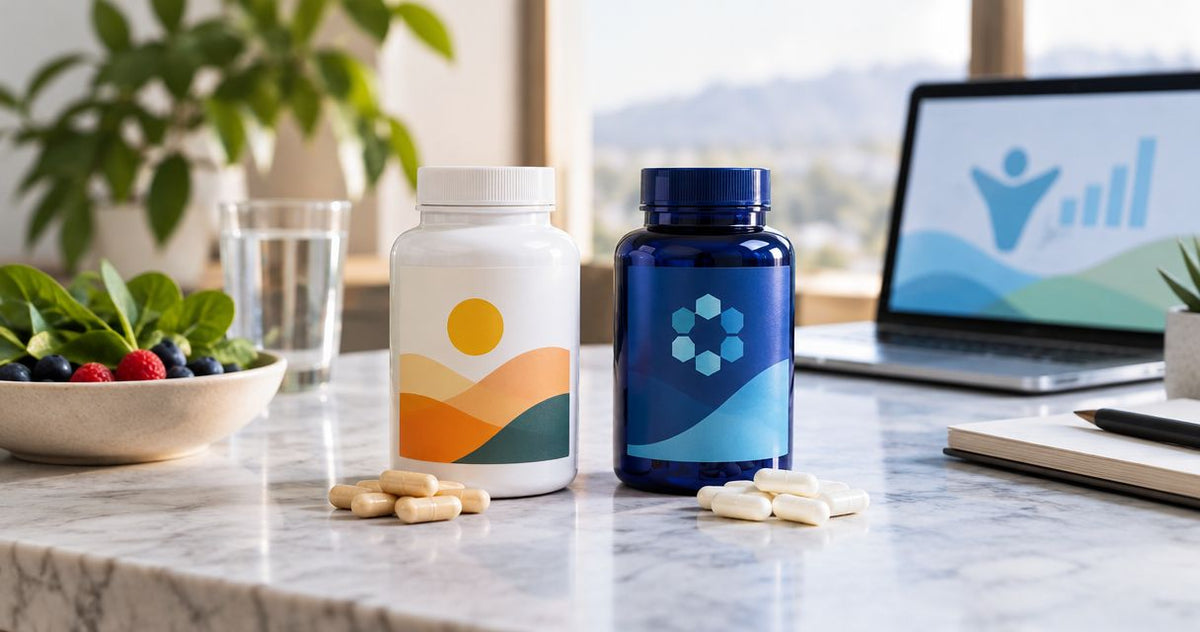
Choose Solnutrition if you want to shop herbal supplements around everyday wellness goals; choose Life Extension if you want a broader selection of vitamins, minerals, and other nutritional supplements. This 2026 comparison separates shopping fit from product effectiveness so you can choose a formula for a clear reason—not just a familiar brand name.
- Sol nutrition vs life extension: choose Solnutrition for herbal supplements organized around everyday wellness goals.
- Life Extension is the better starting point for shoppers comparing vitamins, minerals, and other nutritional supplement categories.
- Neither brand wins on effectiveness without evidence for the specific formula and intended use.
- Compare serving directions, ingredient amounts, warnings, and purchase terms before choosing a supplement.
Why this matters
A supplement brand can be a good shopping fit without every product being right for you. Start with your goal. Then check whether the actual formula, directions, and cautions match your needs.
For example, Belly Reset is a relevant product page to review when exploring the client's gut-health range. Its name is a starting point for shopping, not evidence that it addresses the cause of digestive symptoms. That distinction matters when comparing herbal wellness products with nutrient-focused alternatives.
For a 2026 purchase, separate these questions: Does the brand sell the type of supplement you want? Does the individual product have a suitable formula? Is taking it appropriate for you? A positive answer to the first question does not settle the other two.
At a glance
| Dimension | Solnutrition | Life Extension |
|---|---|---|
| Best for | Wellness-focused shoppers seeking herbal supplements | Shoppers comparing a broader nutritional supplement range |
| Standout shopping feature | Products organized around recognizable wellness goals | Selection across vitamins, minerals, and other supplement categories |
| Vitamins and minerals | Herbal positioning is the main reason to consider the brand | Better starting point for nutrient-focused shopping |
| Specialized nutrient categories | Start here when your priority is herbal wellness | Better starting point for categories such as omega-3s and probiotics |
| Goal-led shopping | Direct fit for gut health, energy, sleep, stress, and reproductive wellness interests | Relevant when you want to translate a goal into specific nutrient options |
| Evidence for results | Judge the specific formula, not the brand name | Judge the specific formula, not the brand name |
| Safety and suitability | Review ingredients, directions, warnings, and medication interactions | Review ingredients, directions, warnings, and medication interactions |
| Pricing model | Product-by-product retail shopping | Product-by-product retail shopping |
The table compares where to begin shopping. It does not rank clinical effectiveness, manufacturing quality, or the safety of individual products. Those judgments require product-level information rather than a brand-wide assumption.
Solnutrition is the clearer fit for herbal-first shopping
Solnutrition herbal supplements are best for shoppers who want to begin with an everyday wellness goal. The brand's stated focus includes gut health, weight and fitness, energy, sleep, stress, and women's and men's health. That gives an herbal-first shopper a direct starting point.
The advantage is relevance. If you already want to explore herbal support, you do not have to begin by treating every vitamin, mineral, or specialty nutrient as an equally suitable option. You can first identify the area of wellness that matters to you, then examine the corresponding product.
The limitation is that a goal-based product name cannot tell you everything you need to know. It does not establish ingredient amounts, interactions, suitability during pregnancy, or evidence for a particular outcome. Read the label before deciding.
Life Extension remains relevant if your goal leads you toward a specific nutrient rather than an herbal approach. The choice here is about your preferred starting point—not a claim that herbs work better than vitamins or that natural ingredients are automatically gentler.
Life Extension wins for vitamin and mineral shopping
Life Extension is the better starting point when you are specifically shopping for vitamins or minerals. Its publicly documented supplement range includes those categories. That matches a nutrient-led question more directly than choosing a brand because it emphasizes herbal wellness.
This distinction is useful when a clinician has identified a nutritional need or you are comparing a particular nutrient across labels. Your task becomes checking the nutrient form, amount per serving, directions, and suitability—not choosing the most appealing wellness theme.
For context, the FDA's Daily Values for adults and children aged four and older include:
- Vitamin D: 20 mcg.
- Vitamin C: 90 mg.
- Zinc: 11 mg.
These are label reference values, not individualized supplement prescriptions. They help explain percent Daily Value on Supplement Facts panels; they do not mean you should automatically take those amounts as supplements.
For your 2026 comparison, use the same reference point across products. Comparing a vitamin amount in milligrams with another product's percentage without reading both labels is not a meaningful assessment. The limitation of nutrient-first shopping is equally clear: finding a familiar nutrient does not establish that you need more of it.
Life Extension also fits specialty nutrient comparisons
Life Extension is the better starting point if you want to compare nutritional categories such as omega-3s or probiotics. These are distinct from an herbal-first shopping approach, and the brand's publicly documented range includes both.
Category fit is only the beginning. An omega-3 comparison requires attention to the amounts of the relevant fatty acids, while a probiotic comparison requires attention to the organisms identified on the label and evidence for the intended use. A shared category name does not make two formulas interchangeable.
The benefit of this shopping approach is precision: you can narrow the comparison to the type of supplement you actually intend to evaluate. Its drawback is the extra label work. More category options do not remove the need to understand what is inside each product.
Choose the herbal route when that is your stated preference and the individual formula suits you. Choose the nutrient-category route when you have a specific nutritional question. Neither approach justifies adding several supplements because they all sound connected to the same broad goal.
Solnutrition makes goal-led browsing more direct
For a shopper who starts with “I want to support my evening routine” rather than a named nutrient, the client's wellness-focused product naming offers a direct entry point. Sleep Deeply is one relevant page to examine within its sleep-oriented range.
That is a shopping advantage, not a promise about sleep duration or quality. Review the formula and warnings before assuming it fits your routine, especially if you use medication or other products that affect alertness.
Keep three questions separate as you browse:
- Goal match: Does the product address the wellness area you intended to explore?
- Label match: Do the ingredients and directions fit the approach you want?
- Routine match: Can you use it without duplicating ingredients or conflicting with existing care?
Life Extension is a useful alternative when you prefer to begin with a known ingredient or supplement category. The trade-off is doing more of the translation from your everyday goal to the product attributes you want to compare.
In 2026, choose your shopping route deliberately. Goal-led browsing suits a wellness-first shopper; nutrient-led browsing suits someone who already knows the category they want. Neither route should replace evaluation of persistent or unexplained symptoms.
Neither brand wins automatically on evidence
Brand reputation is not evidence that every formula delivers the outcome you want. For either company, distinguish research on an ingredient from research on the finished supplement. They answer different questions.
An ingredient study does not automatically validate every product containing that ingredient. The amount, preparation, combination, study population, and measured outcome all affect how closely the research applies to the product in your hand.
Use these evidence questions when comparing formulas:
- Was the research about the finished product or an individual ingredient?
- Does the studied preparation match the label closely enough to be relevant?
- Does the research examine your intended use rather than an unrelated outcome?
- Were benefits assessed in people whose circumstances resemble yours?
A research reference earns attention only when it helps answer those questions. Scientific language, an appealing product name, or a long ingredient list does not settle them.
For this dimension, the verdict is a tie: choose the product with evidence relevant to its actual formula and your intended use. Do not award either brand a blanket effectiveness win. A narrower, supported claim is more useful than a broad promise about wellness.
Both require the same safety checks
Herbal supplements and nutrient supplements both deserve careful review. “Natural” does not mean free of interactions, and a familiar vitamin is not automatically appropriate at every amount. The FDA does not approve dietary supplements for safety and effectiveness before they reach the market.
Before buying from either brand, review your current medications and supplements with a pharmacist or qualified clinician when interaction concerns apply. Include products you use occasionally, not just those you take every day.
Pay particular attention if you are pregnant, breastfeeding, preparing for surgery, or managing a medical condition. Do not infer suitability from a product's wellness category or from the fact that it is sold without a prescription.
For your 2026 routine, check:
- Ingredient overlap: Look for repeated ingredients across your existing products.
- Directions: Follow the individual label rather than transferring instructions from another supplement.
- Warnings: Read cautions before purchase, not after opening the bottle.
- Symptoms: Seek care for persistent or concerning symptoms instead of repeatedly changing supplements.
Neither brand wins this dimension by default. The appropriate choice is the product that passes your individual safety review; sometimes the right decision is not to add a supplement at all.
Pricing: compare the purchase structure, not a headline offer
Both brands support product-by-product retail shopping. That means your comparison should focus on the individual product and its purchase terms, rather than assuming either brand requires an ongoing plan.
For a one-time purchase, the practical advantage is a clear decision about a single product. If an ongoing purchase option is presented at checkout, evaluate that arrangement separately. Check renewal frequency, cancellation terms, and whether the quantity matches your intended use before agreeing.
Do not compare bottles alone. Read the serving size and servings per container, then consider how the label directs you to use the product. Different serving instructions can make apparently similar packages difficult to compare.
For a 2026 purchase, check the current product page and checkout terms. There is no brand-wide pricing winner here: compare the formula you want under the purchase arrangement you actually intend to use. Do not choose an unsuitable formula simply because its purchasing arrangement looks convenient.
Final verdict: choose by shopping intent
Choose Solnutrition if you are an herbal-first wellness shopper
Solnutrition wins for the shopper who wants herbal supplements and prefers to browse by goals such as gut health, energy, stress, or sleep. Its stated positioning matches that intent directly.
Use that fit to create a shortlist, not to skip label review. The deciding product still needs to suit your routine, health circumstances, and expectations. If your question concerns a diagnosed deficiency or a clinician-specified nutrient, begin with that requirement instead.
Choose Life Extension if you are a nutrient-first comparison shopper
Life Extension wins for the shopper who wants to compare vitamins, minerals, omega-3s, probiotics, and other nutritional supplement categories. Start there when your question is already about a particular nutrient or category.
Its wider category fit does not mean every option belongs in your routine. Keep the shortlist narrow and reject products that do not answer your original question. The strongest purchase decision has a clear purpose and a suitable label.
One-glance scorecard
| Dimension | Winner |
|---|---|
| Herbal-first shopping | Solnutrition |
| Vitamin and mineral shopping | Life Extension |
| Specialty nutrient comparisons | Life Extension |
| Goal-led wellness browsing | Solnutrition |
| Evidence for a specific outcome | No automatic winner; compare formulas |
| Individual safety and suitability | No automatic winner; review your circumstances |
| Purchase structure | No automatic winner; compare product terms |
FAQ
Is Solnutrition better than Life Extension?
Solnutrition is the better fit for herbal-first, goal-led wellness shopping; Life Extension is the better starting point for a broader nutritional supplement comparison. Neither has a blanket advantage in effectiveness across every product.
Which brand should I choose for vitamins and minerals?
Life Extension is the better starting point for vitamin and mineral shopping. Compare the specific nutrient, amount per serving, directions, and suitability rather than choosing on brand familiarity alone.
Which brand fits someone looking for herbal supplements?
Solnutrition fits shoppers who specifically want herbal supplements organized around everyday wellness interests. Review each product's label before deciding that its formula is right for you.
Are natural herbal supplements automatically safer?
No, natural herbal supplements are not automatically safer than other supplements. Herbs can interact with medications, so check warnings and discuss relevant concerns with a pharmacist or clinician.
Can I take supplements from both brands together?
Products from both brands need a combined ingredient and interaction review before you take them together. Different brand names do not prevent duplicate ingredients or incompatible combinations.
How should I compare the cost of supplements?
Compare current purchase terms alongside serving size, servings per container, and label directions. A bottle-to-bottle comparison does not account for differences in how products are intended to be used.
Does research on an ingredient prove a supplement works?
Research on an ingredient does not automatically prove that a finished supplement produces the same result. Check whether the preparation, amount, study population, and intended outcome match the product closely enough to apply.
Are either brand's supplements FDA-approved to treat diseases?
Dietary supplements are not FDA-approved to treat diseases. Do not use a wellness product as a substitute for evaluation or prescribed treatment of a medical condition.
One last thing
Before shopping, write down the question your purchase needs to answer. “I want herbal wellness support” and “I need to compare a specific nutrient” lead to different shortlists—and different winners.
Choose the formula you can explain, not the brand you feel obliged to prefer. If you cannot state its purpose, identify its ingredients, and understand its directions and warnings, pause before adding it to your routine.
Share:
Digestive supplements for nurses on 12-hour shifts: complete 2026 guide
Automate your supplement refills with Subscribe & Save (2026)