

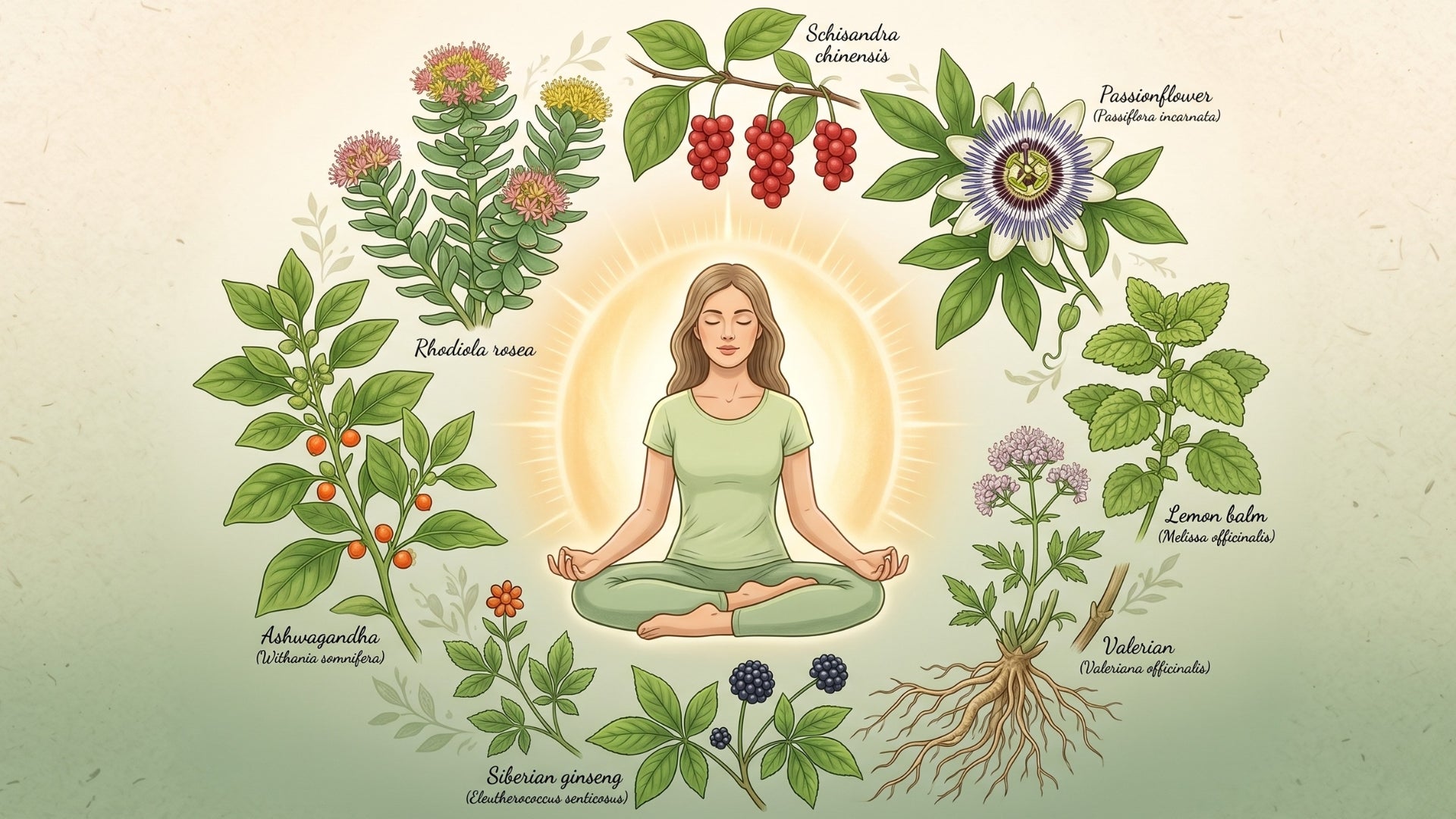
If you're drowning in stress and looking for something beyond your doctor's prescription pad, you're not alone. Every year, millions of people search for the best herbal supplements for stress, hoping to find relief without the side effects of pharmaceutical medications.
The good news? There actually are effective botanical solutions. The bad news? Most of what you'll find online is either oversimplified marketing or contradictory information that leaves you confused about what actually works.
After thirty years of clinical practice—blending Traditional Chinese Medicine with Western research—I've tested nearly every herb marketed for stress. Some are genuine game-changers. Others are expensive placebos. In this guide, I'm going to show you exactly which best herbal supplements for stress have real science behind them, how they work, and which combinations create synergistic effects that single herbs can't achieve alone.
Why Herbs for Stress? The Case for Botanical Medicine
Before we get into the specifics, let's address the fundamental question: Why consider best herbal supplements for stress when you could just take a pharmaceutical?
There are several compelling reasons:
Fewer Side Effects: Most pharmaceutical anxiety and stress medications have significant side effects—sexual dysfunction, weight gain, emotional blunting, dependency issues. Properly chosen herbs tend to have gentler side effect profiles.
Root Cause Addressing: Many pharmaceuticals mask symptoms without addressing underlying dysfunction. Quality herbs often work by actually supporting your body's natural stress-buffering systems.
Synergistic Formulation: Unlike single-molecule drugs, the best herbal supplements for stress contain multiple compounds that work together. A single herb contains dozens of active constituents, not just one isolated ingredient.
Long-Term Safety: You can take the best herbal supplements for stress long-term without developing tolerance or dependency. Try that with most pharmaceutical anxiolytics.
This isn't to say herbs are automatically better than pharmaceuticals—for severe anxiety or panic disorder, medication might be necessary and appropriate. But for everyday stress management, the best herbal supplements for stress often outperform drugs while supporting rather than suppressing your body's natural function.
The Science of Stress and How Herbs Help
To understand why certain herbs work for stress, you need to understand what stress actually does to your body.
When you encounter stress—real or perceived—your nervous system activates the sympathetic branch. Your body releases cortisol and adrenaline. Your blood pressure rises. Your digestion shuts down. Your immune function becomes suppressed. Blood sugar spikes.
This is brilliant when you're facing a genuine threat. But when you're stressed about an email or a deadline, this physiological cascade is overkill—and when it happens dozens of times daily, it becomes destructive.
The best herbal supplements for stress work by:
- Supporting parasympathetic activation (the "rest and digest" response)
- Modulating cortisol levels (bringing them into healthy range)
- Reducing inflammation (chronic stress is inflammatory)
- Protecting the nervous system (preventing burnout)
- Improving sleep quality (where recovery happens)
- Balancing neurotransmitters (serotonin, GABA, dopamine)
Different herbs work on different mechanisms, which is why combining them strategically creates better results than using any single herb alone.
The Best Herbal Supplements for Stress: Individual Herbs
Let me walk you through the most evidence-based herbs used for stress management:
Ashwagandha (Withania somnifera)
This is, without question, one of the most researched herbal remedies for anxiety. Multiple clinical studies show that ashwagandha meaningfully reduces cortisol levels, anxiety symptoms, and even improves sleep quality.
The mechanism: Ashwagandha contains compounds called withanolides that modulate the stress response at multiple points. It doesn't just mask anxiety—it actually helps your nervous system become more resilient.
Typical dose: 300-600 mg daily of standardized extract (5% withanolides) Timeline: Benefits usually appear within 2-4 weeks Best for: Generalized anxiety, work stress, elevated cortisol
Rhodiola rosea
Rhodiola is unique because it's both calming and energizing. It reduces anxiety while improving mental clarity and physical endurance—making it exceptional for stress-related fatigue.
The science: Rhodiola affects multiple neurotransmitter systems. It increases serotonin and dopamine availability while reducing stress hormone production.
Typical dose: 200-400 mg daily (3% rosavins and 1% salidroside) Timeline: 1-2 weeks to notice effects Best for: Stress-related fatigue, mental fog, anxiety with low energy
Schisandra chinensis
In Traditional Chinese Medicine, we call schisandra the "five-flavor fruit" because it contains all five tastes. It's one of the most powerful adaptogens for stress, helping your body adapt to physiological and psychological stressors.
What makes it special: Schisandra doesn't just reduce stress—it increases your capacity to handle stress. It improves mental performance, reduces fatigue, and promotes emotional stability.
Typical dose: 500-1,500 mg daily of dried fruit or extract Timeline: 2-4 weeks for full effects Best for: Chronic stress, low resilience, fatigue combined with anxiety
Siberian Ginseng (Eleutherococcus senticosus)
Don't confuse this with Asian ginseng—they're different plants with different properties. Siberian ginseng is excellent for stress-related exhaustion because it supports energy production without overstimulating.
Typical dose: 300-400 mg daily Timeline: 2-3 weeks Best for: Stress-related exhaustion, need for sustained energy
Passionflower (Passiflora incarnata)
For acute anxiety—the kind that shows up right now, not chronic background stress—passionflower is exceptionally effective. Multiple studies show it works as well as some pharmaceutical anxiolytics but without the dependency potential.
Typical dose: 500-900 mg daily or 15-60 drops of tincture Timeline: Effects can appear within hours for acute anxiety Best for: Acute anxiety episodes, nervousness, racing thoughts
Lemon Balm (Melissa officinalis)
This is one of the gentler herbal remedies for anxiety, making it ideal if you're sensitive to stronger herbs or if you're just starting your stress management journey.
Lemon balm works primarily through GABA modulation—it helps your brain's natural calming neurotransmitter work more effectively.
Typical dose: 300-600 mg daily of dried herb or extract Timeline: Can work relatively quickly Best for: Mild anxiety, good for beginning herb users
L-Theanine (from green tea)
While technically an amino acid rather than a whole herb, L-theanine from green tea deserves mention because it's one of the most studied natural stress relief supplements.
It works synergistically with caffeine (if present) to create calm focus rather than jittery energy. If used without caffeine, it's a mild calming agent.
Typical dose: 100-200 mg daily Timeline: Can work within 30 minutes Best for: Anxiety with mental fog, caffeine sensitivity
The Best Herbal Supplements for Stress: Strategic Combinations
While individual herbs work well, the best herbal supplements for stress are often carefully formulated combinations where herbs synergize.
From my clinical experience, certain combinations consistently outperform single herbs:
The Calming Foundation (For everyday stress)
Combination: Ashwagandha + Passionflower + Lemon Balm
This combination addresses the three primary mechanisms of stress: cortisol dysregulation (ashwagandha), acute anxiety (passionflower), and nervous system activation (lemon balm).
The Resilience Builder (For chronic stress and burnout)
Combination: Rhodiola + Schisandra + Siberian Ginseng + Ashwagandha
This is what I prescribe to patients dealing with ongoing high-stress situations. It supports energy, improves stress capacity, and reduces the impact of chronic stress.
The Evening Blend (For stress-disrupted sleep)
Combination: Passionflower + Lemon Balm + Ashwagandha
Sleep is where your nervous system recovers from stress. This combination helps your body actually achieve restful sleep despite stress.
Sol Nutrition's Approach to the Best Herbal Supplements for Stress
In developing best herbal supplements for stress at Sol Nutrition, I focused on creating formulas that address the root mechanism of stress—not just the symptoms.
Adrenal Support™
This is my foundational stress formula, designed for people experiencing the cumulative effect of chronic stress. It contains:
- Ashwagandha (500 mg): Core stress hormone modulation
- Rhodiola (300 mg): Stress resilience and mental clarity
- Schisandra (250 mg): Adaptogenic support and emotional stability
- Siberian Ginseng (200 mg): Sustained energy during stress
- Astragalus (150 mg): Immune support (stress suppresses immunity)
This formula creates synergistic stress support. Users typically report improved sleep, steadier mood, and greater resilience to stress within 3-4 weeks.
Calm Focus™
For people who experience anxiety that manifests as mental fog and difficulty concentrating, this formula combines:
- Rhodiola (400 mg): Mental clarity + stress resilience
- L-Theanine (150 mg): Calm focus
- Ashwagandha (300 mg): Anxiety reduction
- Lemon Balm (200 mg): Gentle nervousness relief
- Gotu Kola (150 mg): Cognitive support
This is my go-to recommendation for people whose stress expresses as "I can't think straight."
Relax Me™
For acute anxiety or nighttime unwinding, this blend contains:
- Passionflower (500 mg): Acute anxiety relief
- Lemon Balm (300 mg): Gentle calming
- Valerian Root (200 mg): Sleep support
- Chamomile (150 mg): Soothing
- Ashwagandha (200 mg): Foundational stress support
This is what patients take when they need immediate relief—perfect for acute stress episodes or evening anxiety.
How to Use the Best Herbal Supplements for Stress
Knowing which are the best herbal supplements for stress is only half the battle. How you use them matters enormously.
Start Low, Go Slow
Begin with lower recommended doses. Individual sensitivity to herbs varies significantly. Someone might thrive on 300 mg of ashwagandha while another person needs 600 mg.
Give Them Time
Unlike pharmaceuticals, herbs typically take 2-4 weeks to show full effects. This isn't because they're weak—it's because they're supporting your body's natural healing, not forcing an immediate response.
Don't judge effectiveness after one dose or even one week. Commit to at least 4 weeks at consistent dosing before deciding if a particular herb or formula is right for you.
Combine With Lifestyle Factors
The best herbal supplements for stress won't solve stress if you're getting four hours of sleep and working 70-hour weeks. Herbs are tools that support lifestyle changes, not replacements for them.
Sleep, movement, nutrition, and stress boundaries matter as much as the herbs themselves.
Watch for Interactions
Some herbs interact with medications. If you take pharmaceuticals, research potential interactions before starting any new supplement regimen. When in doubt, consult a functional medicine practitioner.
Consistency Matters
Taking herbs sporadically won't work. You need consistent daily dosing for several weeks to see results. The most common failure point I see is people trying an herb for 3-4 days, not noticing instant results, and quitting.
The Difference Between Quality Herbal Supplements
Not all versions of the best herbal supplements for stress are created equal. The supplement industry is largely unregulated, which means quality varies wildly.
What to Look For
Standardized Extracts: Rather than whole powdered herb, look for standardized extracts where active constituents are concentrated and verified. For ashwagandha, look for at least 5% withanolides.
Third-Party Testing: The product should be tested by an independent lab for purity and potency. This should be clearly stated on the label or on the company website.
Transparent Sourcing: You should be able to find information about where herbs were grown, how they were harvested, and how they were processed.
Proper Dosing: Many supplements use doses that are too low to be effective. Research what clinical studies used, then look for products in that range.
Minimal Fillers: The ingredient list should be short and recognizable. Avoid products with long lists of binders and fillers.
Best Herbal Supplements for Stress vs. Pharmaceuticals: A Realistic Comparison
I'm often asked how the best herbal supplements for stress compare to pharmaceutical anxiolytics. Here's my honest assessment:
For Mild to Moderate Anxiety: Herbs are often superior. They address root causes, have fewer side effects, and create lasting benefits rather than just symptom suppression.
For Acute Panic Attacks: Pharmaceuticals are faster-acting. If you're in acute crisis, a pharmaceutical anti-anxiety medication might be more appropriate initially.
For Severe Generalized Anxiety Disorder: Herbs alone might not be sufficient. A combination of herbs and possibly pharmaceutical support, combined with therapy and lifestyle changes, often works best.
For Prevention and Long-Term Management: Herbs excel. They help prevent stress from reaching crisis levels while supporting your body's natural resilience.
The best approach often isn't "herbs or drugs"—it's "what combination creates the best outcome for this person's specific situation?"
Why Internal Links Matter for Stress Management
As you explore the best herbal supplements for stress, you might also benefit from understanding related topics. For instance, learning about adrenal fatigue symptoms helps you recognize whether your stress is creating deeper physiological dysfunction. Similarly, understanding how to lower cortisol naturally gives you context for why certain herbs work.
You might also want to explore natural remedies for anxiety for a broader perspective beyond supplements, or learn about adaptogens for stress relief for a deeper dive into adaptogenic herbs specifically.
For sleep disruption caused by stress, check out our guide on herbal remedies for sleep, and if you're interested in comprehensive stress management, read about stress & adrenal health for the bigger picture.
Common Questions About the Best Herbal Supplements for Stress
Q: Can I take multiple herbs together?
A: Yes, and often should. Properly formulated combinations are more effective than single herbs because different herbs address different mechanisms of stress.
Q: How long do results last after I stop taking them?
A: This varies. Some benefits persist because you've supported your nervous system's recovery. But most people find that ongoing use maintains ongoing benefits. Stress management, like fitness, requires consistent practice.
Q: Are there any herbs I should avoid?
A: Some herbs can interact with medications or might not suit certain conditions. Pregnant women should be especially cautious. If you take pharmaceuticals, research potential interactions. When in doubt, consult a healthcare provider.
Q: Can I take the best herbal supplements for stress with caffeine?
A: Most herbs work fine with caffeine, though some people find that reducing caffeine while taking calming herbs creates better results. If you're highly sensitive to stimulants, consider reducing caffeine while using stress-relief herbs.
Q: How do I know if an herb is working?
A: Look for subtle changes: Better sleep, slightly improved mood, easier to handle annoying situations, less heart racing. Changes are usually gradual, not dramatic. This is how you know they're supporting your nervous system rather than forcing a response.
Q: What's the difference between the best herbal supplements for stress and adaptogens?
A: All adaptogens are herbs used for stress, but not all stress-relief herbs are adaptogens. Adaptogens specifically help your body adapt to and recover from stress. Passionflower, for instance, is excellent for anxiety but not technically an adaptogen.
The Bottom Line on Best Herbal Supplements for Stress
After three decades of clinical practice and testing countless combinations, I can confidently say that properly chosen best herbal supplements for stress work. Not as a replacement for sleep, good nutrition, or stress boundaries—but as powerful support that helps your body handle modern life's demands.
The herbs that consistently show the best results—ashwagandha, rhodiola, schisandra, passionflower—have decades of research supporting their use. They work through multiple mechanisms, they have minimal side effects, and they actually support your body's natural resilience rather than suppressing your nervous system.
But remember: The best herbal supplements for stress are part of a broader strategy that includes sleep, movement, proper nutrition, and—most importantly—addressing the root sources of stress in your life.
Herbs can help you feel better while you make those deeper changes. But they can't substitute for them.
Share:
How to Lower Cortisol Naturally: 12 Proven Strategies to Reclaim Your Peace
Best Supplement for Liver Health 2026: Full Ranking