

Supporting gut health while training for a marathon is a 16-week protocol built around the runner's gut's two real enemies: reduced blood flow during hard efforts and the mechanical battering of miles. The plan runs on four pillars — a daily gut-support base, fueling rehearsal on long-run days, relief tools for the weeks training stalls you, and a race-morning routine rehearsed so many times it is boring. What makes this segment different is that the gut is a trainable organ: runners who train the gut race well, and runners who improvise on race day pay for it at mile 18.
Why marathon training stresses your gut
Running diverts blood away from the digestive tract — up to 80% at hard intensities — which slows digestion and makes anything still sitting in the stomach a problem. Add the mechanical jostling of thousands of footstrikes, dehydration that thickens what remains, and high-carb fueling that many guts have never practiced at race concentrations, and you get the classic runner's complaints: side stitches, urgent porta-potty stops, bloating and nausea in the final third of long runs.
The good news is that the gut adapts. Blood flow, transit speed and carb absorption all improve with repeated training — which is exactly why this protocol treats the gut like a fourth muscle group, trained deliberately across the whole plan rather than patched on race week.
Step 1: Build the daily gut base
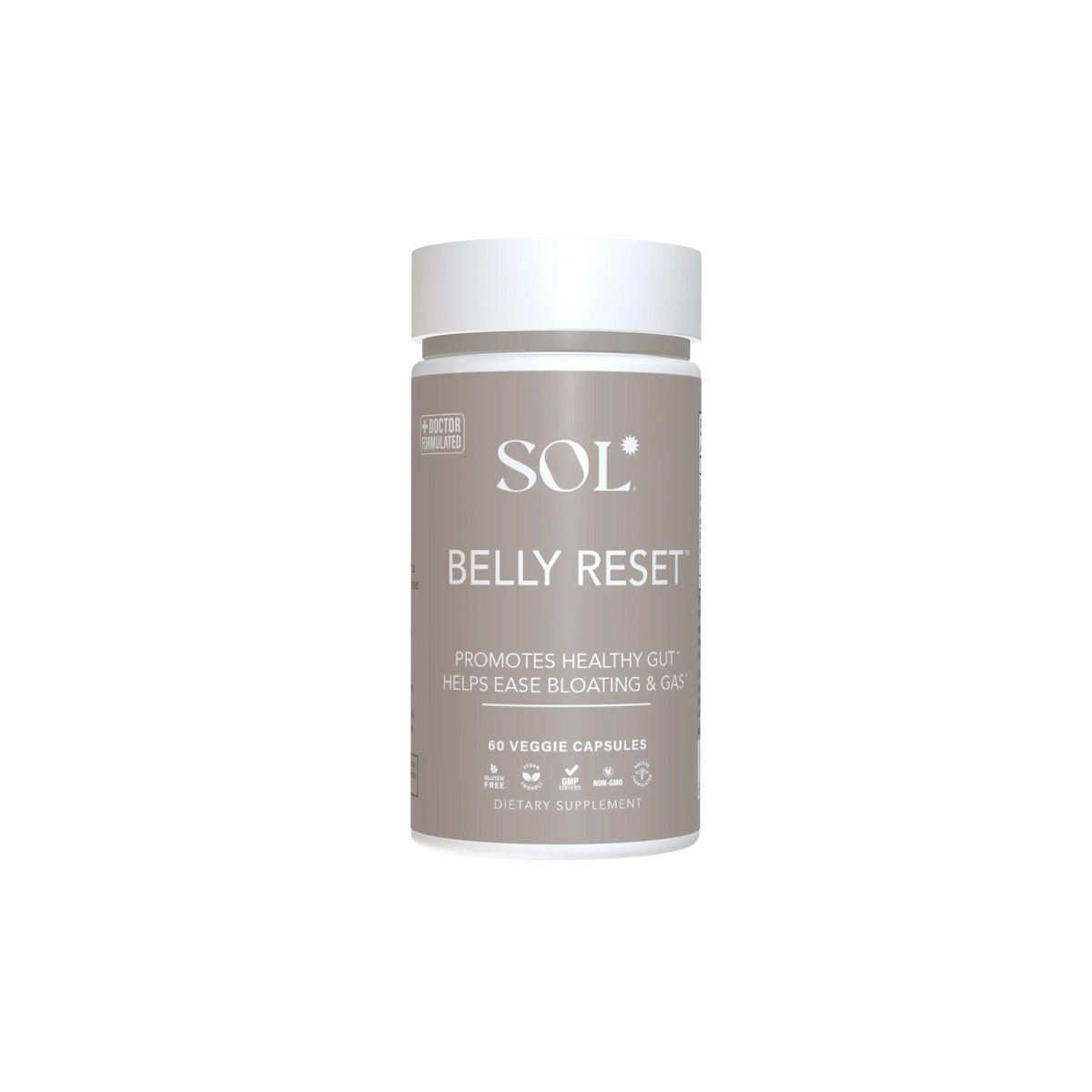
The foundation is a gut that is calm before any run starts. Sol Nutrition's Belly Reset is the daily-driver pick: a gut health blend designed to support digestion, reduce bloating and restore balance from within — the reset-after-indulgence formula that doubles as everyday training support. Take it daily from week one; consistency, not timing, is the mechanism.
- Run it every morning, training day or rest day
- Give it a full 2-3 weeks before judging it against long-run symptoms
- Keep meal times regular on rest days — the gut's clock hates chaos
Step 2: Rehearse fueling on every long run
Race-day gut trouble is almost always unpracticed fueling, not a bad product. From your first 8-miler onward, practice the exact products, concentrations and timing you plan to race with — gels, chews, fluids, everything.
- Start fueling at 45 minutes into any run over an hour, then every 30-45 minutes
- Practice at race pace, not easy pace — absorption changes with intensity
- Train with the carb concentration you will race at; the gut adapts to load over weeks
- Log what you ate, when, and how the gut responded — patterns show up by run four
Step 3: Keep relief tools in the kit
Heavy training weeks can stall digestion — reduced appetite variety, dehydration and pre-run nerves all contribute. Time to Go covers the stalled days: a soothing herbal formula that helps restore digestive comfort and promote bowel health when a backed-up week is grinding your training down. Use it as a relief tool on rest days, not a daily crutch.
Step 4: Tame race-week stomachs
The taper is when nerves find the gut. For carb-loading dinners and race-morning butterflies, Stomach Ease fits the brief: a doctor-formulated herbal blend rooted in Traditional Chinese Medicine that calms heartburn, neutralizes excess stomach acid and restores digestive comfort after heavy meals — including the biggest bowl of pasta of your year the night before the race.


Step 5: Protect hydration and fiber timing
Two levers do more for the runner's gut than any supplement. First, hydration: dehydration thickens what is in the gut and slows everything down, so drink steadily through the day and match fluids to sweat on long runs. Second, fiber timing: keep fiber-rich meals at lunch and dinner, not within three hours of a run — a low-residue dinner the night before long runs and race day is the single most effective porta-potty insurance there is.
Step 6: Build the race-morning routine and rehearse it
Nothing new on race day applies doubly to the gut. Three hours before the start: a small, familiar, low-fiber, low-fat breakfast you have eaten before every long run of the block. One cup of coffee if that is your routine — no more. Take your usual morning dose of Belly Reset, keep Stomach Ease in the drop bag, and do not improvise with the expo samples.
Comparing your options
| Option | Best for | Key limitation |
|---|---|---|
| Belly Reset (daily) | Baseline digestion through the 16-week block | Needs 2-3 weeks of consistent use |
| Time to Go (relief) | Stalled training weeks | Relief tool, not a daily driver |
| Stomach Ease (race week) | Carb-load dinners and race-morning acid | Stomach-facing, not a fueling product |
| Gut-training via fueling rehearsal | Race-day tolerance itself | Requires actually doing it every long run |
| High-fiber eating all block | Everyday health | Backfires within 3 hours of a run |
Common mistakes marathon runners make
- Rehearsing pace but not fueling. The gut adapts to what you practice; an untrained gut at race carb loads is the #1 cause of mile-18 bathroom stops.
- Trying a new gel on race day. Nothing new, including the free ones from the expo.
- Skipping the daily base. A calm baseline makes every other intervention work better.
- Fiber-loading the night before. Keep fiber at lunch, keep dinner low-residue.
- Ignoring chronic symptoms. Blood, persistent pain or symptoms that survive rest days need a sports-medicine physician, not another gel.
One last thing
The single highest-return habit in this whole plan costs nothing: eat your race-day breakfast before every single long run, at the same time before the start. By week 12 the routine is so automatic that race morning feels like any other Sunday — and a gut that has seen the exact meal, timing and coffee thirty times does not surprise you at the start line. For the broader digestion picture beyond training, the gut health guide for bloating and digestion covers the everyday baseline.
FAQ
How do I prevent stomach issues during a marathon?
Train the gut: practice your exact race fueling on every long run, keep meals low-fiber within three hours of running, hydrate steadily, and build a daily digestion base like Belly Reset across the training block.
What are the best gut health supplements for runners?
A daily blend like Belly Reset for baseline digestion, a relief formula like Time to Go for stalled training weeks, and a stomach calmer like Stomach Ease for carb-load dinners and race-morning nerves. Each does a different job.
When should I start a gut supplement during marathon training?
At the start of the block. Herbal gut support builds over 2-3 weeks, so starting in week one means it is fully working by the time your longest runs arrive.
Why does running give me diarrhea?
Hard efforts divert blood from the gut and mechanically jostle it, which speeds transit — especially when fueling or fiber has not been practiced. Rehearsed fueling and low-fiber pre-run meals are the fix.
What should I eat the night before a marathon?
A familiar, low-fiber, carb-forward dinner you have tested before long runs — pasta with simple sauce, rice, bread. Skip the heavy cream sauces and the giant salad.
When are runner's gut issues a medical problem?
Blood in stool, persistent pain, or symptoms that continue on rest days need a doctor's evaluation. Race-day urgency in an otherwise healthy gut is common and trainable.
Share:
Best Probiotics for Women's Vaginal Health (2026 Ranked)
Digestive enzyme supplements for slow digestion