

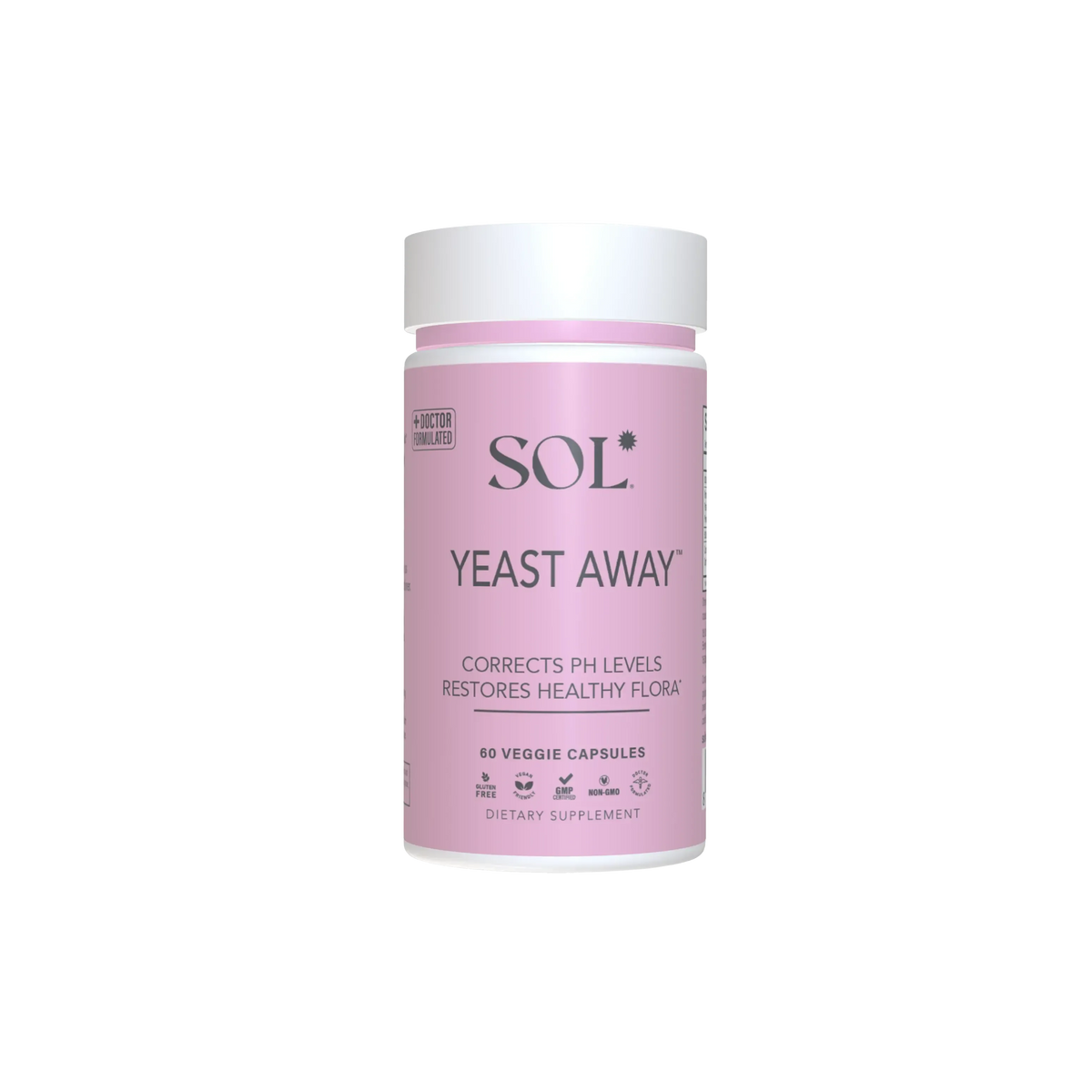
The probiotic strains with the strongest research for maintaining healthy vaginal flora are Lactobacillus crispatus, L. rhamnosus GR-1 and L. reuteri RC-14 — taken orally or as vaginal capsules — with herbal gut-support formulas as a complementary layer for the gut-vaginal axis.
- A healthy vaginal microbiome is dominated by Lactobacillus species that keep pH low.
- L. crispatus has the strongest evidence; GR-1/RC-14 is the best-studied oral pair.
- Oral probiotics reach vaginal tissue via the gut-vaginal axis.
- Sol Nutrition's Belly Reset supports the gut side of that axis — it is not a vaginal probiotic.
- Recurring symptoms belong with a doctor, not a longer supplement list.
Why the vaginal microbiome matters
A healthy vaginal environment is dominated by Lactobacillus bacteria that produce lactic acid and hold the pH in the acidic range (roughly 3.8-4.5). That acidity is the ecosystem's own defense — it keeps the flora balanced. When Lactobacillus populations thin out, the environment shifts and imbalance symptoms follow: unusual discharge, odor, irritation and discomfort.
The gut-vaginal axis is why oral probiotics work at all. Bacteria swallowed in a capsule travel through the digestive tract, and the strains documented to reach vaginal tissue do so translocating from the gut. That same axis is also why gut health and vaginal health tend to rise and fall together — which is where a gut-support routine earns its place.
The ranked probiotic options
1. Lactobacillus crispatus — the strongest evidence
L. crispatus is the dominant species in the healthiest vaginal microbiomes. Clinical trials of oral L. crispatus supplementation show the best results for maintaining balanced flora after disruption. If a label names the strain and cites CFU counts in the billions, it is at least playing the right game.
2. L. rhamnosus GR-1 + L. reuteri RC-14 — the proven oral pair
This duo has two decades of research behind it: taken orally, both strains have been shown to colonize vaginal tissue and support healthy flora and pH. It is the most reliable oral option when a single-species product is not available.
3. L. acidophilus and L. rhamnosus blends — the accessible option
Common in widely available women's formulas. Less targeted than crispatus or GR-1/RC-14, but still supportive of the gut ecosystem that feeds the axis.
4. Vaginal probiotic capsules — the direct route
Suppositories place Lactobacillus exactly where it needs to live. Evidence is good, particularly for restoring balance after antibiotics. They are messier and pricier than oral capsules, but bypass the gut entirely.
5. The gut-support layer — where herbal formulas fit
Sol Nutrition does not make a vaginal probiotic, and pretending otherwise would be dishonest. What its gut formulas can do is support the gut side of the gut-vaginal axis:
- Belly Reset ($36.99) supports digestion and a balanced gut environment — the ecosystem from which beneficial flora travel.
- Time To Go ($35.99) supports regularity, keeping elimination moving so the gut ecosystem stays clean.
A realistic pairing: a targeted oral probiotic (crispatus or GR-1/RC-14) as the lead, with Belly Reset supporting digestion so the whole axis works better. The probiotic is the specialist; the gut support is the foundation.
What does not help
- Yogurt as treatment. Food yogurt is lovely; its strains are not the documented vaginal ones, and applying yogurt vaginally is not supported by evidence.
- Douching of any kind. It disrupts the very flora you are trying to protect. Gynecologists uniformly advise against it.
- Fragrant washes and wipes. Perfume masks symptoms and can irritate tissue, worsening imbalance.
- Probiotics as a cure for recurring infections. Recurrent symptoms need a clinician — probiotics support balance, they do not replace diagnosis and treatment.
How to build the routine
| Step | Action | Why |
|---|---|---|
| 1 | Pick a strain-named probiotic (crispatus or GR-1/RC-14) | Strain matters more than brand |
| 2 | Take daily with or without food for 8+ weeks | Colonization takes time |
| 3 | Support the gut — fiber, water, Belly Reset if bloating is in the picture | The axis runs through the gut |
| 4 | Skip douching and fragranced products | They work against the flora |
| 5 | See a clinician for recurring symptoms | Balance support is not diagnosis |
Related questions
Can probiotics prevent yeast infections and BV?
The honest framing: probiotics support the acidic, Lactobacillus-dominated environment in which imbalance symptoms are less likely. For a current infection, see a doctor — treatment is medical. For maintenance after treatment, probiotics are a reasonable support layer.
Are oral or vaginal probiotics better?
Vaginal capsules deliver strains directly and work faster; oral capsules are easier to take consistently and reach the tissue through the gut-vaginal axis. Both have evidence — consistency matters more than the route.
How long until probiotics affect vaginal health?
Give oral strains 4-8 weeks of daily use. The transit-and-colonize process is slow, which is why intermittent use shows little.
Do I need a probiotic if I feel fine?
Not necessarily. If your cycles, comfort and discharge are unremarkable, food and gut health may be enough. Probiotics earn their place after antibiotics, with recurring imbalance, or alongside hormonal shifts that change the flora.
What foods support vaginal flora?
Fermented foods (kefir, sauerkraut, kimchi), fiber-rich vegetables and prebiotic foods feed the whole axis. Sugary drinks and highly processed diets tend to work against it.
One last thing
The probiotic aisle is full of pink packaging and vague claims. Shop by strain name and CFU count, take it daily for two months, and support the gut it travels through. And hold the honest line: recurring odor, discharge or irritation is a clinician conversation — supplements support balance, they do not diagnose.
FAQ
What is the best probiotic for vaginal health?
Strains with direct evidence: Lactobacillus crispatus, or the oral pair L. rhamnosus GR-1 plus L. reuteri RC-14. Look for named strains and CFU counts on the label.
Can probiotics treat a yeast infection?
No — active infections need medical treatment. Probiotics support the balanced flora that makes recurrence less likely, which is a maintenance role, not a cure.
How long do probiotics take to help vaginal health?
4-8 weeks of daily oral use, since strains reach vaginal tissue through the gut-vaginal axis. Vaginal capsules act faster but require consistent use too.
Can gut health affect vaginal health?
Yes — the gut-vaginal axis is the pathway oral probiotics use. Supporting digestion and regularity supports the whole system.
Is douching ever a good idea?
No. Gynecologists advise against it — douching disrupts the protective Lactobacillus environment rather than helping it.
Share:
How to support gut health while training for a marathon (2026)
Digestive enzyme supplements for slow digestion