

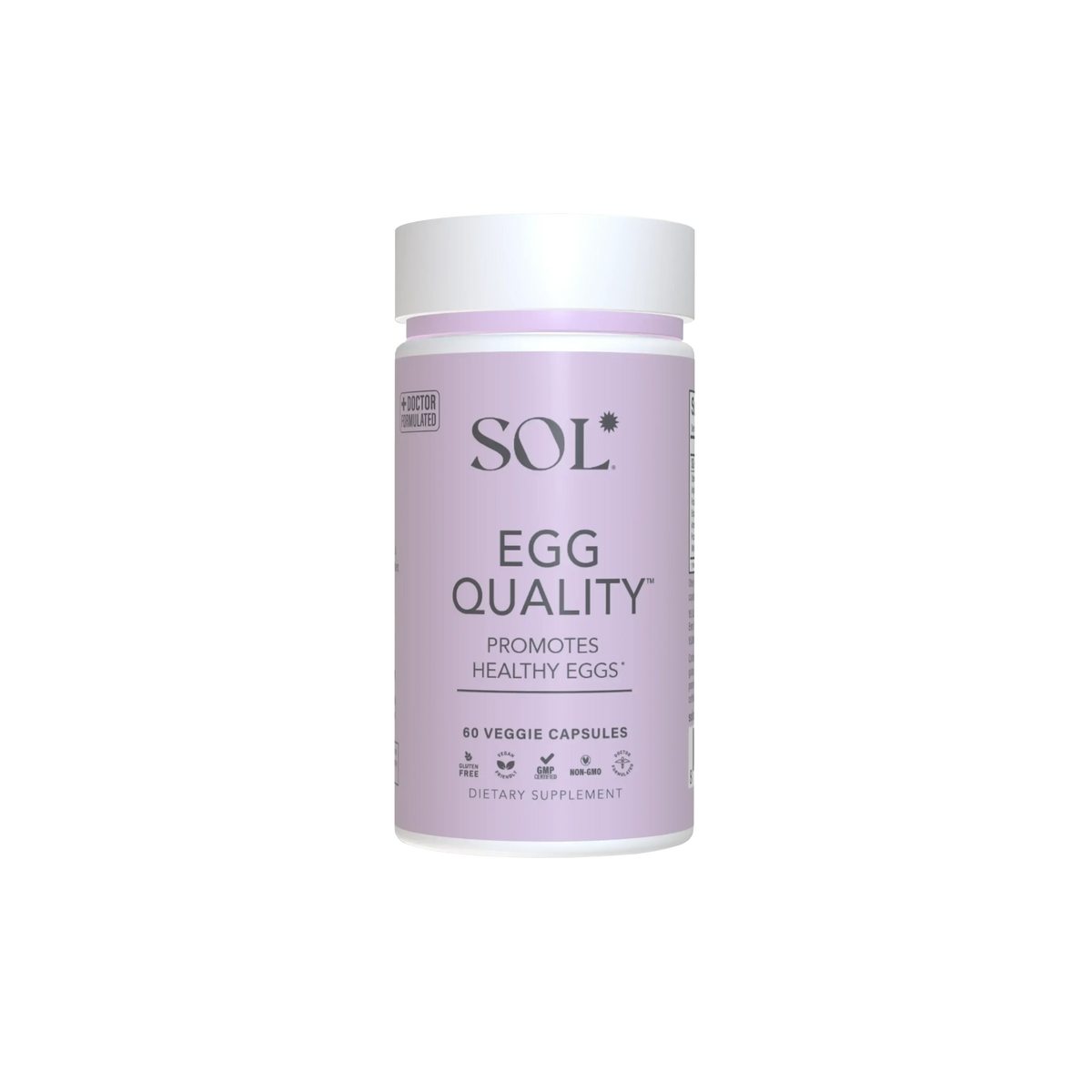
Fertility while breastfeeding comes down to biology first: prolactin suppresses ovulation, so the honest levers are feeding frequency, cycle tracking and nutrition — with herbal support like Super Swimmers for the male side of the partnership while the female cycle reboots.
- Breastfeeding suppresses ovulation through prolactin — this is biology, not a deficiency.
- Fertility usually returns as feeds stretch longer and nights shorten.
- Track cervical mucus and ovulation tests from cycle one — the first cycles may be anovulatory.
- The male partner can start supporting his side now: Super Swimmers supports sperm quality.
- No supplement overrides lactational amenorrhea — patience and tracking do.
How breastfeeding affects fertility
Suckling raises prolactin, and prolactin suppresses the hormonal signals that drive ovulation. The more frequent and longer the feeds — especially overnight — the stronger the suppression. This is the basis of lactational amenorrhea, which is why some mothers go months without a period while exclusively breastfeeding on demand.
The return of fertility follows a predictable arc: first cervical fluid changes, then the first bleed (often anovulatory), then cycles that gradually begin ovulating again. It is a reboot, not a switch — which is why the practical plan is tracking, not forcing.
How to support fertility while breastfeeding
1. Work with the feeding pattern, not against it
Long night feeds and frequent day feeds hold prolactin high. As feeds space out — a natural consequence of solids, daycare, or simply the baby growing — ovulation typically resumes. If you are actively trying to conceive and breastfeeding an older baby, some couples find that stretching feed intervals helps the cycle return faster; discuss feeding changes with your pediatric provider before making them.
2. Track before you assume
- Start ovulation predictor kits and cervical-fluid checks from the first postpartum cycle.
- Expect the first one or two cycles to be anovulatory — this is normal and not a fertility verdict.
- Basal body temperature adds a second signal once cycles begin.
3. Feed the recovery
- Adequate calories — lactation itself burns hundreds daily; under-eating delays the return of ovulation.
- Iron, folate, B12, vitamin D — the postpartum nutrient baseline; many women leave pregnancy low on these.
- Protein and healthy fats — hormones are built from raw materials; extreme low-fat diets work against hormone production.
4. Where herbal support fits — the partnership angle
While the female system reboots on its own timeline, the male partner's contribution can start immediately:
- Super Swimmers ($38.99) supports sperm quality and male reproductive health — a meaningful lever, since sperm regeneration runs on a roughly 74-day cycle, so starting now means fresher parameters by the time cycles return.
- Man Power ($38.99) supports male vitality, stamina and healthy circulation — the general men's-vitality layer alongside.
- For the breastfeeding mother, skip the herbal hormone formulas until cycles return and your provider clears them — the postpartum, still-lactating body is not the population most formulas were designed for.
A practical stack: Super Swimmers daily for the partner, a postpartum-appropriate multivitamin for the mother, and a cycle-tracking app from day one.
What does not work
- Supplements that promise to 'restore fertility' while breastfeeding. Prolactin suppression is physiological; nothing in a capsule switches it off.
- Weaning abruptly to force a cycle. The cycle usually returns within weeks of changed feeding patterns anyway — and the decision to wean deserves its own weighing, not a deadline.
- Judging from the first period. Early postpartum bleeds are often anovulatory; conception odds follow the ovulatory cycles that come later.
- Ignoring the male side. Roughly a third of conception difficulty involves male factors; waiting until cycles return to optimize his side wastes months.
Timeline expectations
| Feeding pattern | Typical cycle return |
|---|---|
| Exclusive, frequent night feeds | Often 6-12+ months |
| Mixed feeding / solids started | Often 3-8 months |
| Feeds spaced 5+ hours, nights short | Often 2-6 months |
| Fully weaned | Usually within 4-8 weeks |
Wide ranges, individual bodies — the tracking app tells you more than any table.
Related questions
Can you get pregnant while breastfeeding without a period?
Yes — ovulation precedes the first period, so conception is possible before you ever bleed. This is why tracking cervical fluid matters more than waiting for a cycle to start.
How long until fertility returns while breastfeeding?
Highly variable: months for frequent night feeders, weeks to months after feeds space out or weaning. The range is wide and normal.
Do supplements increase fertility while breastfeeding?
Nutrients (iron, folate, B12, vitamin D) support the recovery; no supplement overrides prolactin suppression. Herbal male-fertility formulas like Super Swimmers are a useful parallel track for the partner.
Should I wean to get pregnant faster?
Sometimes feed-spacing alone lets cycles return; full weaning accelerates it more. It is a personal decision — discuss both the fertility timeline and your feeding goals with your provider rather than defaulting to either extreme.
What vitamins should a breastfeeding mother take for fertility?
A postpartum-appropriate multivitamin covering iron, folate, B12 and vitamin D, adequate calories and protein, and hydration. Anything hormonal or herbal beyond that deserves provider sign-off.
One last thing
Fertility while breastfeeding is a timing problem, not a deficiency problem. Track from day one, feed yourself properly, and give the male partner's side a head start with Super Swimmers — sperm take three months to regenerate, so the work he does now shows up in the parameters that matter later. The cycle will come; your job is to be ready when it does.
FAQ
How can I boost fertility while breastfeeding?
Track ovulation from the first cycle signs, keep nutrition replete (iron, folate, B12, vitamin D), let feeds space out naturally, and have the male partner start a sperm-quality formula like Super Swimmers now — sperm take about 3 months to regenerate.
Can you conceive before your first postpartum period?
Yes — ovulation comes first. Some women conceive before ever seeing a period, which is why cervical-fluid tracking beats waiting.
How does breastfeeding prevent pregnancy?
Frequent suckling keeps prolactin elevated, which suppresses ovulation. Less frequent, shorter feeds gradually lift that suppression.
Are herbal fertility supplements safe while breastfeeding?
Most lack safety data for lactation — clear anything with your provider. Male-partner formulas avoid the question entirely.
When does ovulation return while breastfeeding?
Varies widely — often months after feeds space out or solids begin, and months longer with frequent night feeds.


Share:
Best Magnesium Supplements for Sleep: 2026 Guide
How to Curb Sugar Cravings Naturally: 2026 Guide