

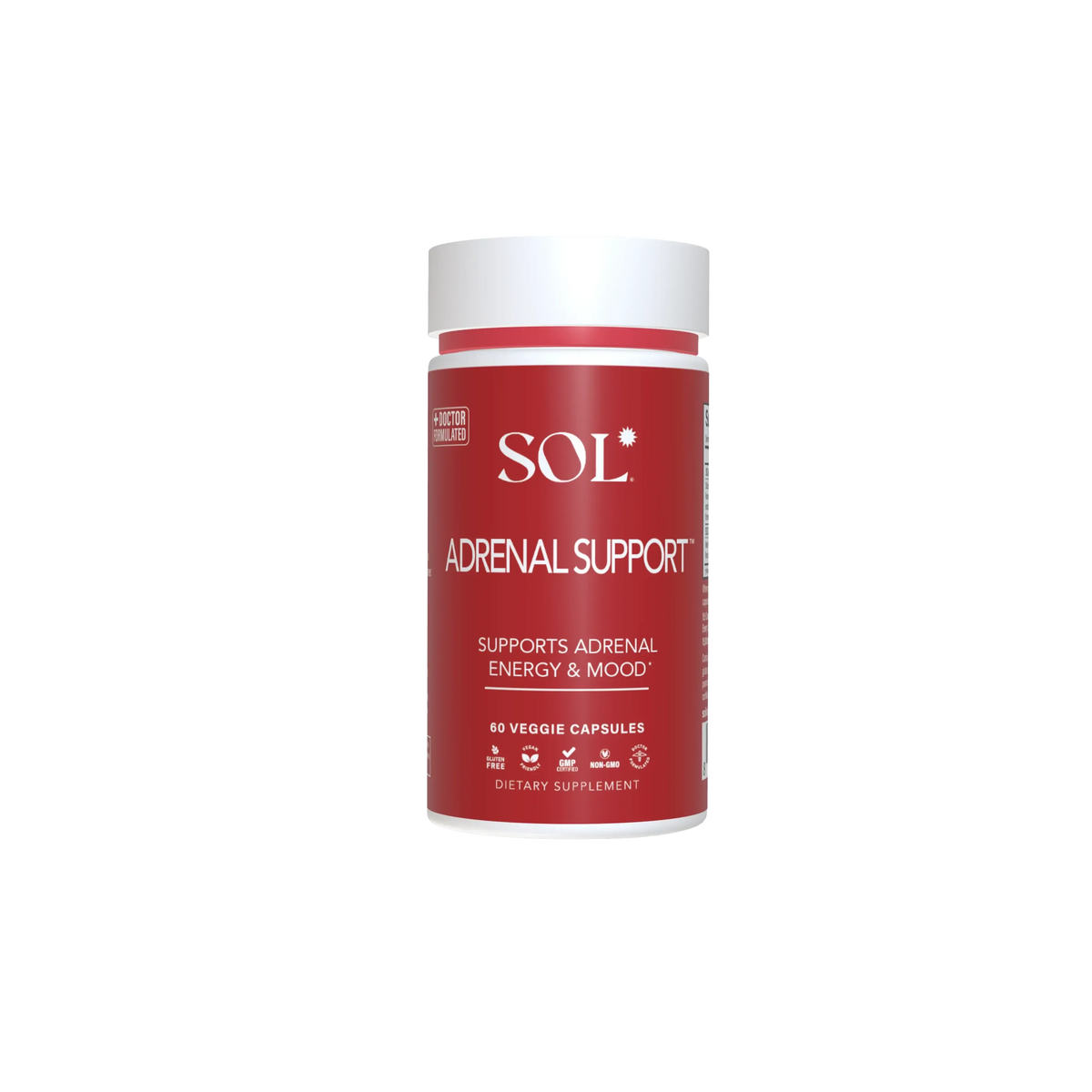
Adaptogens help competitive athletes manage the stress side of training load — but they support recovery, they do not fix overtraining. The honest stack: back off the volume first, then use formulas like Adrenal Support, Calm Focus and GoGo Energy to support the systems stress taxes: adrenals, sleep and steady energy.
- Overtraining shows up first as sleep quality, mood and resting heart rate changes — not fatigue alone.
- Adaptogens support stress resilience; they cannot rescue a program you refuse to deload.
- Ashwagandha has the deepest sports-research evidence; rhodiola and ginseng follow.
- Sol Nutrition's Adrenal Support covers the wired-but-tired athlete pattern.
- Expect 2-4 weeks of consistent use before judging any adaptogen.
What overtraining actually looks like
Overtraining is not tiredness — every competitive athlete is tired. It is the pattern where output falls while effort stays constant: resting heart rate drifts up, sleep fragments, motivation flattens, small niggles accumulate, and easy sessions feel like intervals. Hormonal markers (like a suppressed cortisol rhythm) and mood questionnaires are how sports scientists detect it; athletes usually feel it first as 'everything feels heavy.'
The single evidence-backed treatment is reduced load — a deload week, then a rebuilt progression. Adaptogens occupy the space next to that: they support the stress-response system while you fix the training error.
The adaptogens, ranked by evidence
1. Ashwagandha — the best-studied for stress and recovery
The root with the deepest research in athletes: trials show support for healthy cortisol rhythms, perceived recovery and sleep quality in trained men. Typical studied doses run 300-600 mg daily of a standardized extract, taken consistently for 6-8 weeks.
2. Rhodiola rosea — for training-day fatigue
Studied for fatigue resistance and perceived exertion — the 'everything feels lighter' adaptogen. Best taken earlier in the day; evening dosing can feel stimulating.
3. Panax ginseng — the traditional endurance herb
Long history in traditional Chinese medicine for vitality and stamina; human trials are more mixed but generally supportive for energy and perceived exertion.
4. The herbal formula layer — where Sol Nutrition fits
Rather than stacking single-herb powders, traditional formulas blend adaptogens for the whole pattern:
- Adrenal Support ($38.99) targets the wired-but-tired athlete — nourishing the adrenal system that chronic training and life stress tax, supporting resilience and steady energy through the day.
- Calm Focus ($36.99) supports the mental side: clarity and composure without sedation — useful in competition blocks when nerves scatter focus.
- GoGo Energy ($36.99) supports clean, non-stimulant energy for demanding training days, without the caffeine loan you repay at night.
A practical stack: Adrenal Support daily through a heavy block, Calm Focus before technical sessions or competition, GoGo Energy before key workouts. Deload first; the herbs make the recovery stick.
What does not work
- Adaptogens instead of a deload. No herb substitutes for reduced volume when the system is flagging.
- Stimulant stacking. More caffeine deepens the sleep deficit that caused the problem.
- Judging after one week. Adaptogens build effects over weeks; one dose tells you nothing.
- Ignoring the warning signs. Persistent elevated resting HR, insomnia and mood flatness are training errors, not supplement gaps.
The deload-plus-support week
| Day | Training | Support layer |
|---|---|---|
| Mon-Wed | Reduced volume, technique focus | Adrenal Support AM |
| Thu-Fri | Easy aerobic only | Calm Focus before work, not training |
| Sat-Sun | Full rest | Sleep priority, no alarm |
| Next block | Rebuild at 80% volume | Keep the formula stack |
Related questions
Do adaptogens help athletic recovery?
The evidence supports a role for ashwagandha in supporting stress-hormone balance, sleep and perceived recovery in trained people. Rhodiola shows promise for fatigue resistance. None of it outworks a proper deload — the order is: reduce load, then support the system.
How do I know if I'm overtrained?
The signature is falling performance with sustained effort, plus disturbed sleep, elevated resting heart rate and flattened mood that lasts more than a week. Fatigue that a rest day fixes is ordinary training tiredness.
Which adaptogen is best for athletes?
Ashwagandha has the deepest trial base for stress, cortisol rhythm and recovery support in athletes. Formulas like Adrenal Support blend adaptogenic herbs for the same systems in traditional proportions.
Can I take adaptogens on competition day?
Most are fine, but test anything new in training first — never debut a supplement on race day. Calm Focus-type formulas are best trialed in hard sessions weeks before.
How long do adaptogens take to work?
Consistent daily use for 2-4 weeks is the minimum honest trial for stress-support effects; sleep often responds first.
One last thing
If your numbers are falling, the supplement shelf is not where the answer lives — the training calendar is. Take the deload, protect sleep, and use adaptogens like Adrenal Support and Calm Focus to hold the stress side steady while the body rebuilds. Athletes who treat recovery as training get careers; athletes who treat fatigue as weakness get injuries.
FAQ
What are the best adaptogens for athletes?
Ashwagandha has the strongest trial evidence for stress and recovery support, followed by rhodiola for fatigue resistance. Formula-based options like Adrenal Support blend these traditions in one capsule.
Can adaptogens fix overtraining?
No — overtraining requires reduced training load. Adaptogens support the stress systems while you deload; they cannot compensate for volume you refuse to cut.
How long should I take ashwagandha for training recovery?
Studied protocols run 6-8 weeks of consistent daily use at 300-600 mg of a standardized extract. Judge effects at week 4, not day 3.
Do adaptogens affect sleep?
Ashwagandha commonly supports sleep quality; rhodiola taken late can feel stimulating. Take energizing adaptogens earlier in the day.
Should athletes cycle adaptogens?
A common practical pattern is 6-8 weeks on, 1-2 weeks off. There is no definitive rule — consistency within a block matters more than the cycling schedule.
Related guides
- Best cortisol reducing supplements for stress and belly fat
- Best supplements for focus and mental clarity


Share:
Adaptogenic Herbs for Women's Hormone Balance: 2026 Guide
Herbal Supplements for Joint Pain 2026