

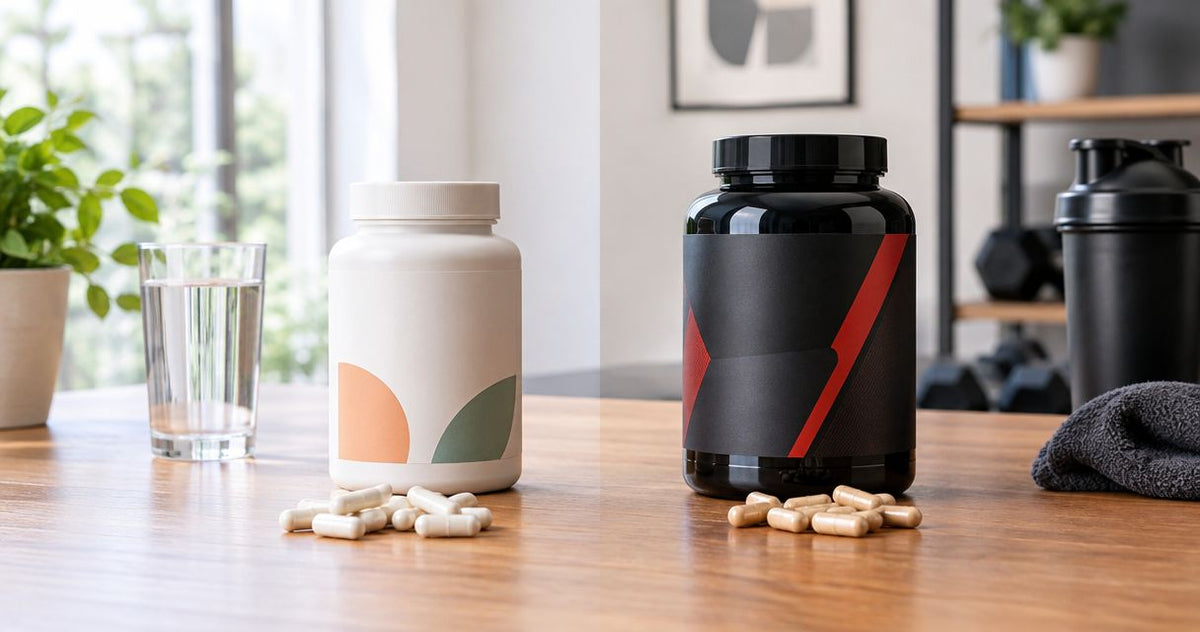
Choose Sol Nutrition if you want a focused herbal-supplement brand organized around everyday wellness goals; choose GNC if you want a broader supplement retailer with multiple brands and physical stores. In 2026, the useful distinction is focused herbal shopping versus a wider selection—not a blanket claim that either sells more effective supplements.
- Sol nutrition vs gnc comes down to focused herbal supplements versus a broader supplement retailer.
- Sol Nutrition is best for wellness-focused shoppers who want a goal-led herbal supplement catalog.
- GNC is best for shoppers comparing brands, sports nutrition, vitamins, and supplement formats.
- Neither brand name proves effectiveness; evaluate the exact formula, serving instructions, evidence, and safety.
Why this matters
A supplement brand and a supplement retailer solve different shopping problems. Sol Nutrition sells its own herbal wellness products, while GNC sells supplements across brands and categories. Comparing the businesses without separating those roles creates the wrong question: which company is better at everything?
Ask a narrower question instead. Do you already want an herbal approach to an everyday wellness goal, or do you need to compare different supplement types before deciding? That distinction makes your 2026 shortlist more useful than a brand popularity contest.
Choose the shopping model first, then evaluate the product. A convenient catalog does not establish that a formula fits your needs, and a large selection does not make every item equally suitable.
At a glance
| Dimension | Sol Nutrition | GNC |
|---|---|---|
| Best for | Wellness-focused shoppers seeking herbal supplements | Shoppers comparing brands and supplement categories |
| Herbal focus | Herbal supplements are the brand's stated focus | Herbal products sit within a broader supplement selection |
| Category breadth | Focused wellness catalog | Broader selection spanning vitamins and sports nutrition |
| Shopping access | Shopify-based online store | Online shopping and physical stores |
| Goal-led browsing | Catalog addresses gut health, energy, sleep, stress, and reproductive wellness | Broader browsing across wellness and fitness needs |
| Evidence standard | Evaluate the exact formula and its supporting evidence | Evaluate the exact formula and its supporting evidence |
| Safety standard | Check ingredients, serving directions, warnings, and interactions | Check ingredients, serving directions, warnings, and interactions |
| Pricing model | Purchase products from the brand's store | Purchase products through a multibrand retailer |
| Standout distinction | Focused herbal wellness positioning | Cross-brand comparison and store access |
The table compares shopping fit, not clinical outcomes. Neither seller earns an effectiveness advantage simply because one specializes in herbs and the other carries more categories.
Sol Nutrition is the better fit for focused herbal shopping
Sol Nutrition herbal supplements are best for shoppers who already want a goal-led herbal wellness catalog. The brand's stated focus covers gut health, weight and fitness, energy, sleep, stress, and women's and men's health. That makes it a relevant starting point when you prefer to shop within that approach rather than compare every supplement category.
For example, Belly Reset is a product page to review when exploring the brand's gut-wellness catalog. Read its current label and directions before choosing it. The name alone does not establish its ingredients, suitability, or expected results.
The benefit here is focus. You can start with a wellness goal and examine the products associated with it without first sorting through a multibrand retailer's wider range.
The limitation is equally clear: an herbal focus is not a substitute for a specific nutrient, formula, or dose recommended by your healthcare professional. If your shopping brief names an exact ingredient or supplement type, use that requirement—not the brand's overall positioning—to guide the purchase.
GNC wins on category breadth and cross-brand comparison
GNC is the better starting point when your shopping list spans supplement categories or competing brands. Its retail model includes vitamins, sports nutrition, and other wellness supplements. That is a different job from shopping a focused herbal brand.
Consider a shopper who wants to compare a protein supplement with other fitness-nutrition options, or someone who already knows the nutrient they want but has not selected a brand. A broader retailer lets that shopper examine alternatives within the same shopping environment.
The tradeoff is more comparison work. Similar-looking products can differ in ingredients, serving sizes, warnings, and intended use. A familiar retailer name does not remove the need to read each label separately.
Do not treat breadth as a recommendation to build a larger supplement routine. Start with the specific reason you are shopping, then reject products that do not answer it. A wider catalog is useful when it gives you relevant alternatives, not when it adds unrelated bottles to your basket.
GNC wins when physical-store access matters
GNC offers a physical-store shopping route alongside online shopping. That makes it the better fit when you want to examine packaging in person or prefer an in-store purchase process.
The focused herbal brand in this comparison is described as a Shopify-based e-commerce business. Its stated shopping route is online. For a shopper comfortable reviewing product information digitally, that model fits; for someone who specifically wants a store visit, GNC has the clearer advantage.
An in-store conversation is not the same as medical advice. Bring questions about medications, pregnancy, persistent symptoms, or diagnosed conditions to a qualified healthcare professional rather than using retail guidance as a replacement.
For a 2026 purchase, decide how you want to shop before comparing formulas. If you prefer online research, assess the product information rather than giving either business an automatic convenience win. If physical access is essential, make that a deciding criterion.
The focused catalog wins for goal-led herbal browsing
Goal-led browsing suits someone who can describe the wellness area they want to explore but has not chosen an ingredient. Gut comfort, an evening routine, or everyday energy are starting points—not diagnoses and not proof that a supplement is needed.
The herbal brand's stated catalog maps to those kinds of wellness goals. That structure gives you a place to begin researching within its specialty. GNC's broader selection is more useful when you want to compare different approaches to the same shopping goal.
Before you browse, write a short brief:
- Your goal: Describe the everyday concern without diagnosing yourself.
- Your current routine: Include supplements, medications, eating patterns, and sleep habits.
- Your question: Identify what you need to learn before buying.
This keeps a goal-based product name from becoming the entire decision. A bottle associated with energy does not explain why you feel tired; a gut-wellness product does not identify the cause of digestive symptoms.
Use wellness categories to organize research, not to replace assessment. If symptoms persist, worsen, or interfere with daily life, seek healthcare advice instead of repeatedly switching products.
Neither seller wins on evidence without a formula-level comparison
An effectiveness comparison needs a specific product on each side and evidence relevant to those formulas. Comparing a brand with an entire retailer cannot establish which supplement works better for you.
The evidence question has several layers. Research on an ingredient is not automatically research on a finished blend. A study using a particular preparation or amount does not establish identical results for every product carrying the same ingredient name.
Use this checklist for either seller:
- Ingredient identity: Confirm what the product actually contains.
- Amounts: Check the amounts disclosed per serving.
- Research match: Look for evidence relevant to the preparation and intended use.
- Outcome: Separate general wellness language from a clearly studied result.
- Product testing: Verify any testing claim through its named source and scope.
Testimonials describe individual experiences; they do not establish that you will get the same result. Likewise, herbal positioning, store size, and polished product descriptions are not substitutes for relevant evidence.
The evidence standard for your 2026 shortlist should be the same regardless of where you shop. Give the advantage to the better-supported formula, not automatically to the more familiar seller.
Both require the same safety checks
Natural does not mean suitable for everyone. Herbal supplements can interact with medications, and suitability changes with health conditions, pregnancy, breastfeeding, and planned procedures.
The U.S. Food and Drug Administration does not approve dietary supplements for safety and effectiveness before they are marketed. That applies to the supplement category, not just to one company in this comparison. A retail listing is not FDA approval.
Before adding a product, review the current Supplement Facts panel, other ingredients, serving directions, and warnings. Include everything you already take when discussing it with a clinician or pharmacist; checking a supplement in isolation can miss overlap with an existing routine.
For reproductive-wellness shopping, take extra care. A product name referring to fertility, cycles, or menopause does not establish that it is appropriate during pregnancy or fertility treatment. Do not infer suitability from the category label.
The same rule applies to fitness shopping. A wellness or sports-nutrition label does not establish that a product meets an athlete's competition requirements. If you compete under supplement restrictions, verify the relevant product-specific certification and your sport's rules.
Neither business wins this dimension by default. The safe choice follows the label, your circumstances, and qualified advice.
Pricing models: direct-brand shopping versus retail comparison
The pricing-model distinction is straightforward: the focused brand sells products through its own store, while GNC operates as a multibrand retailer. That gives you different comparison routes, but it does not establish which purchase offers better value.
Direct-brand shopping keeps your evaluation within one company's catalog. Retail shopping lets you compare alternatives from different brands. The tradeoff is focused selection versus more opportunities to compare formulations and purchase terms.
For your 2026 decision, compare equivalent information rather than bottle appearance:
- The labeled serving size and total servings.
- The amounts of the ingredients you are evaluating.
- The directions and warnings that affect suitability.
- The purchase terms shown before you complete checkout.
A bottle is not a standardized unit of value. Different serving instructions can make two similarly sized packages meaningfully different purchases.
Do not choose a formula solely because the checkout total looks attractive. First establish that it fits your goal and safety requirements. Then review the current purchase details on the seller's site; do not assume recurring-order terms, shipping policies, or guarantees from either business's shopping model.
Standout distinction: focus wins for herbal intent; breadth wins for exploration
The focused brand's strongest distinction is that herbal wellness is central to its identity. GNC's strongest distinction is the ability to compare across brands and categories, with physical-store access as another shopping option.
These strengths answer different briefs. If you already want herbal wellness products, a focused catalog is a relevant destination. If you are still deciding between supplement types, a wider retailer gives you a broader comparison setting.
Neither strength settles a product-quality question. Keep the shopping experience separate from the evidence and safety checks, even when the catalog feels like a good match.
Final verdict: choose by your shopping brief
Choose Sol Nutrition if you want focused herbal wellness
Best for: the wellness-focused online shopper who already prefers herbal supplements. Choose Sol Nutrition herbal supplements when you want to explore a catalog centered on everyday wellness goals and are prepared to evaluate the current product labels before buying.
Do not choose this route merely because herbal sounds gentler. Your deciding factor should be fit with your preferred shopping approach, followed by formula-level review.
Choose GNC if you want broader comparison or a store visit
Best for: the cross-brand shopper comparing vitamins, sports nutrition, and other supplement categories. Choose GNC when breadth or physical-store access is part of your shopping brief.
Do not choose GNC merely because a larger retailer feels like an automatic quality guarantee. Compare the actual products and reject options that do not meet your requirements.
| Dimension | Winner |
|---|---|
| Focused herbal shopping | Sol Nutrition |
| Category breadth and cross-brand comparison | GNC |
| Physical-store access | GNC |
| Goal-led herbal browsing | Focused herbal catalog |
| Evidence standard | Tie: formula-level review required |
| Safety standard | Tie: personal suitability checks required |
| Pricing model | No universal winner; compare equivalent purchase details |
| Standout distinction | Herbal focus for focused intent; retail breadth for exploration |
FAQ
Is Sol Nutrition better than GNC?
Sol Nutrition is the better shopping fit for focused herbal wellness, while GNC is the better fit for cross-brand and cross-category comparison. Neither has an automatic advantage in supplement effectiveness; compare specific formulas.
Does GNC sell only its own supplements?
No, GNC is a multibrand supplement retailer. Its shopping model differs from buying directly from a focused herbal-supplement brand.
Which is better for sports-nutrition shopping?
GNC is the better starting point for broad sports-nutrition comparison. Evaluate the exact product label and any competition-related requirements before choosing a supplement.
Are herbal supplements safer than vitamins?
Herbal supplements are not automatically safer than vitamins or other supplements. Safety depends on ingredients, amounts, medications, health conditions, and your circumstances.
Can supplements treat a medical condition?
Dietary supplements are not a substitute for medical diagnosis or treatment. Ask a qualified healthcare professional about persistent symptoms or supplements used alongside prescribed care.
How do I compare value without relying on bottle size?
Compare labeled servings, ingredient amounts, directions, and current purchase terms. Bottle size alone does not tell you whether two products are equivalent.
Should I switch my whole supplement routine when changing brands?
Review each product separately rather than replacing your entire routine based on a brand comparison. Check ingredient overlap and discuss relevant safety questions with a clinician or pharmacist.
One last thing
Before your next 2026 supplement purchase, save the exact label you reviewed. Record the product name, ingredient amounts, serving directions, and the reason you selected it.
That record gives you something concrete to discuss with a pharmacist or clinician. The most useful comparison is the formula you actually plan to take—not the reputation of the storefront selling it.
Share:
Sol Nutrition vs iHerb: which is better in 2026
Vitamin Shoppe alternatives for natural supplements (2026)