

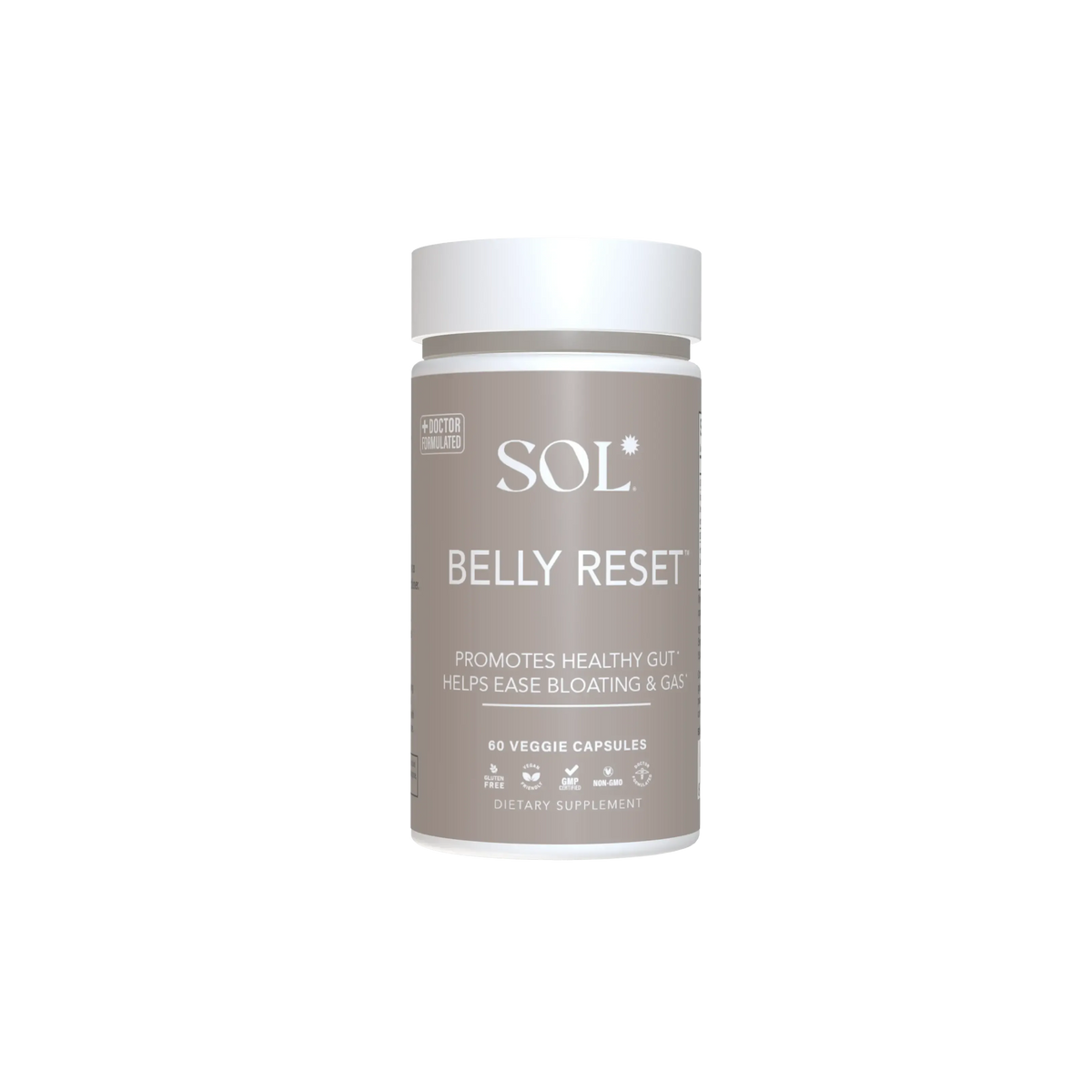
Plant-based eaters face a specific gut-health profile — high fiber load, fewer fermented staples, and less omega-3 and B12 intake — so the supplement stack looks different from an omnivore's: digestive support like Belly Reset for the fiber load, regularity support like Time To Go, and targeted nutrients for the gaps.
- Vegan diets supply great fiber — sometimes too much, too fast, with bloating as the result.
- Fermented plant foods partially replace the probiotic load dairy provides omnivores.
- B12, omega-3 (algal), iron, zinc and iodine are the gaps worth covering.
- Herbal gut formulas like Belly Reset and Time To Go ease the fiber adaptation.
- Track stool, bloat and energy for a month before adding anything else.
What actually changes in a plant-based gut
Vegetarians and vegans tend to have more fiber-fermenting bacteria and produce more short-chain fatty acids — broadly a favorable profile. The catch is the transition: a rapid jump from 15 g to 40+ g of daily fiber overwhelms the fermentation capacity of a gut that has not adapted, and the output is gas, bloating and erratic stools. This is why some people quit a vegan diet blaming the diet when the real problem was ramp-up speed.
A second shift: vegans typically get fewer fermented foods than omnivore diets that include yogurt and kefir. Unless sauerkraut, kimchi, tempeh and plant-based yogurts are deliberate staples, the fermented-food slot runs empty.
The supplement stack, in order
1. Digestive support for the fiber load
- Belly Reset ($36.99) supports digestion, eases bloating and helps restore gut balance — the most useful single addition while your microbiome adapts to the fiber volume.
- Time To Go ($35.99) supports regularity and the constipation-bloat pattern that high-fiber, low-fluid transitions produce.
Practical use: Belly Reset with your two biggest meals during the first 4-6 weeks of any fiber increase, Time To Go on stuck days. Then taper as your own fermentation capacity catches up.
2. Probiotics — chose plant-forward formulas
If fermented foods are not a daily habit, a probiotic capsule with well-studied strains (Lactobacillus and Bifidobacterium species) fills the slot. Check capsules for gelatin if the vegan standard matters to you — several brands specify vegan capsules.
3. The nutrient gaps that touch the gut
- Vitamin B12 — non-negotiable on fully plant-based diets; deficiency mimics fatigue and brain fog.
- Algal omega-3 — the plant-based DHA/EPA source; supports the gut lining's anti-inflammatory balance.
- Iron + vitamin C pairing — plant iron absorbs better alongside vitamin C-rich foods.
- Zinc and iodine — commonly low when meat and dairy exit the plate.
4. Food levers that work better than any capsule
- Ramp fiber by 5 g per week, not 25 g in a weekend.
- Soak and cook legumes thoroughly; canned beans are gentler during adaptation.
- Drink more water than feels necessary — fiber without fluid hardens stools.
- Rotate plant diversity: 30 different plants a week is the research-backed diversity target for microbiome breadth.
A realistic first month
| Week | Focus | Marker |
|---|---|---|
| 1-2 | Belly Reset with main meals, water up | Bloat rating (1-5) after dinner |
| 3-4 | Add fermented plants daily (kimchi, tempeh, kraut) | Stool regularity |
| 5-6 | Add B12 + algal omega-3 if not already | Energy through the afternoon |
| 7-8 | Taper herbal support to as-needed | Whether you still need it |
What to skip
- Digestive enzyme megadoses forever. Short-term enzyme support during adaptation is fine; permanent dependence suggests the ramp-up needs redoing instead.
- Colon cleanses. Your gut does not accumulate years of debris; the cleanse marketing is fiction.
- Fiber supplements stacked on a high-fiber diet. More is not better — comfort is.
- Ignoring B12 because it is not a "gut" supplement. Deficiency undermines the energy gains the whole diet is meant to deliver.
Related questions
Do vegans have better gut health?
Usually more favorable bacterial profiles — more fiber fermenters, more short-chain fatty acids, greater diversity. The advantage shows up after adaptation; the first weeks of a big fiber jump can feel worse than an omnivore baseline.
What supplements should vegans take for digestion?
Digestive-support herbs like Belly Reset during the adaptation window, a probiotic if fermented foods are scarce, and the core nutrient stack: B12, algal omega-3, and iron as needed.
Why am I bloated on a vegan diet?
Almost always fiber ramp-up speed, insufficient water, or legumes introduced faster than your flora can ferment them. Halve the bean portions, double the water, and add digestive support like Belly Reset for a few weeks.
Are vegan probiotics as effective?
Yes — strain efficacy is what matters, not the diet origin of the person taking it. The one practical note: confirm the capsule itself is vegan if that is part of your standard.
How long does vegan gut adaptation take?
Most of the gas and bloating settles within 2-6 weeks as fiber-fermenting bacteria expand. Full microbiome shifts take months; comfort improves well before that.
One last thing
The plant-based gut story is one of the better-supported ones in nutrition — diversity, fiber, fermentation — but only when the ramp respects biology. If you are two weeks into a new vegan diet and miserable, the fix is slower ramping and digestive support, not abandoning the plan. Cover B12 regardless; it is the one gap that quietly undoes everything else.
FAQ
What are the best gut health supplements for vegans?
Digestive support for the fiber load (Belly Reset), regularity support if needed (Time To Go), a strain-named probiotic if fermented foods are scarce, plus B12 and algal omega-3 as the nutrient baseline.
Why does a vegan diet give me gas and bloating?
Fiber introduced faster than your gut flora can ferment it. Increase fiber gradually, drink more water, and use digestive support for the first few weeks.
Do vegans need probiotics?
Not mandatory — vegan diets naturally feed beneficial bacteria with fiber. But fermented foods are less automatic than on an omnivore diet, so a probiotic fills that slot if kimchi, kraut and tempeh are not daily habits.
Which nutrients affect gut health on a plant-based diet?
B12, omega-3s (DHA/EPA), iron, zinc and iodine. Low B12 and iron show up as fatigue that people misattribute to gut problems.
How long until my gut adjusts to a vegan diet?
Comfort usually improves within 2-6 weeks; the deeper microbiome adaptation continues for months. Ramp fiber gradually throughout.
Related guides
- Best gut health supplements for bloating and digestion
- Best prebiotic supplements for gut microbiome balance


Share:
Herbal Supplements for Endometriosis Support 2026
Dry January Liver Detox Supplements (2026)