

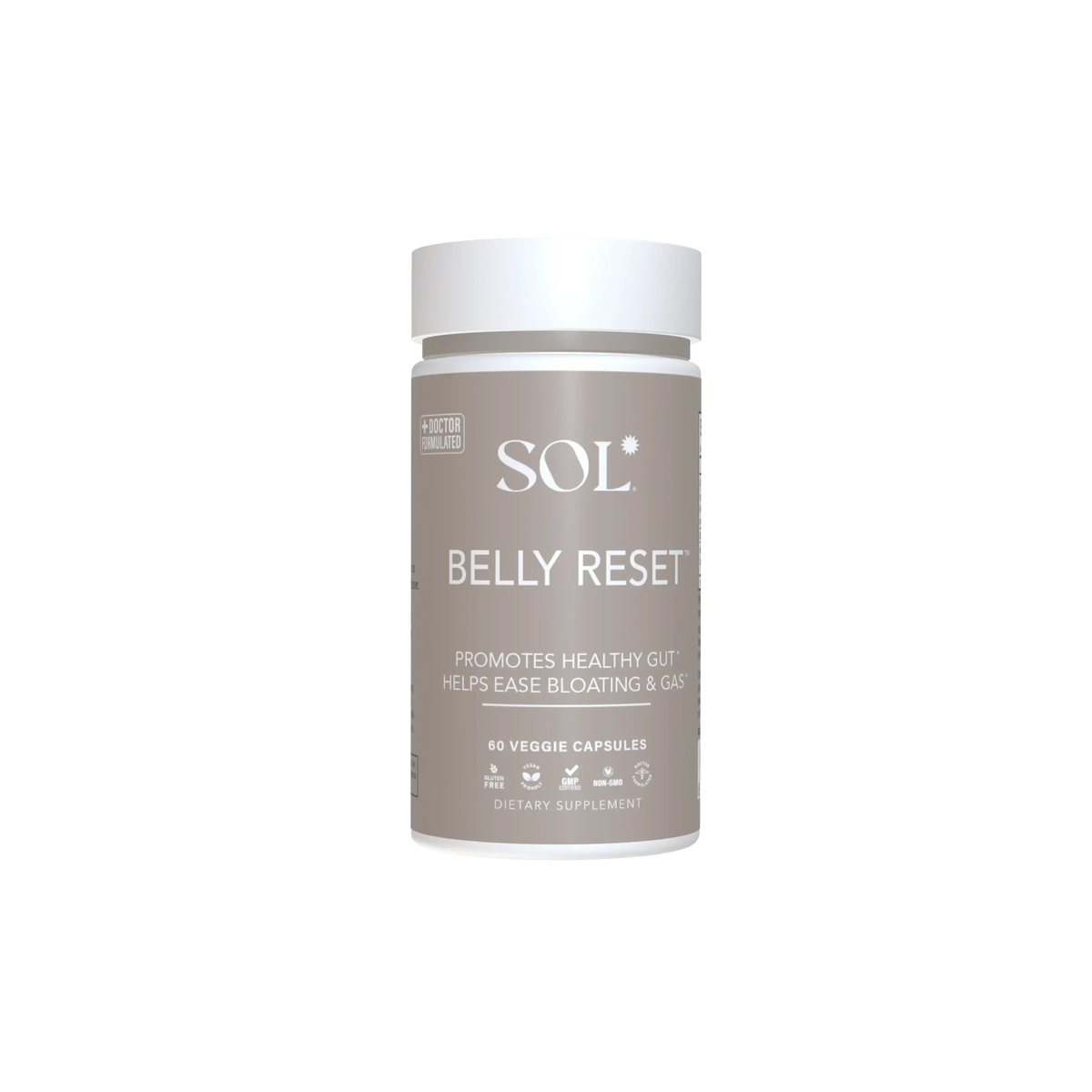
If certain foods leave you bloated, gassy or uncomfortable, the gut-side fix usually runs through two tracks: identify the trigger foods honestly, and strengthen the gut environment with support like Belly Reset and Time To Go. Food sensitivity and gut health are a loop — each worsens the other, and both are workable.
- True food allergies and intolerances are medical diagnoses — the patterns here are about comfort, not testing.
- An elimination diet done properly beats any supplement for finding triggers.
- Herbal digestive support like Belly Reset eases day-to-day comfort while you experiment.
- Stress amplifies gut reactions to the same meal — manage the load, not just the plate.
- Keep a 2-week food-and-symptom log before judging any food guilty.
Sensitivity vs intolerance vs allergy — why it matters
A food allergy is an immune reaction that can be serious and needs medical diagnosis. A intolerance (think lactose) is a digestive limitation. A sensitivity is the gray zone: no clean test, but a reliable pattern of bloating, gas, brain fog or discomfort after certain foods. Most people shopping for gut supplements live in the gray zone — which is why the plan here is about comfort and patterns, not diagnosis.
The gut connection: a stressed or imbalanced gut microbiome amplifies reactions to foods that a calmer gut would shrug off. The same plate can produce different symptoms in different months, depending on sleep, stress and the state of your flora.
The two-track plan
Track 1: Find the actual triggers
- Keep a 14-day log: everything eaten, plus symptom timing and severity (1-5). Patterns need data, not memory.
- Run a proper elimination: remove the common suspects (dairy, gluten, ultra-processed foods, alcohol, carbonated drinks) for 2-3 weeks, then reintroduce one at a time, 72 hours apart, watching for symptoms.
- Watch quantity as much as food. Many 'sensitivities' are dose problems — a splash of milk is fine, a latte is not.
- Do not self-diagnose celiac disease. If symptoms are severe or persistent, get tested before cutting gluten, because the test needs gluten in your diet.
Track 2: Strengthen the gut environment
- Belly Reset ($36.99) supports digestion, eases bloating and helps restore gut balance — the daily-comfort layer while you run the elimination experiments.
- Time To Go ($35.99) supports regularity, since sluggish elimination amplifies bloating and food reactions.
- Fermented foods (kefir, sauerkraut, kimchi) and prebiotic fibers (garlic, oats, asparagus) feed the flora that calm the gut's reactivity over time.
- Stress management — the gut-brain axis is real; the same meal hits differently on a calm day versus a deadline day.
Practical stack: Belly Reset with your two biggest meals, Time To Go on sluggish days, and the food log open on your phone. The herbs manage comfort; the log finds the culprit.
What does not work
- IgG food sensitivity panels. Widely sold, poorly validated — positive results often just reflect foods you eat often. Elimination diets outperform them.
- Eliminating everything forever. Over-restricted diets shrink diet diversity, which starves the very flora that calm the gut.
- Enzyme pills as a license. Lactase with ice cream is fine; it does not make daily ice cream a plan.
- Chasing symptoms with a new supplement each week. One formula, held for 4-6 weeks, beats a rotating cast.
The 6-week experiment
| Week | Action | Watch for |
|---|---|---|
| 1-2 | Food log + Belly Reset daily | Your top 3 suspect patterns |
| 3-4 | Eliminate suspects, keep support | Baseline comfort level |
| 5 | Reintroduce one food per 72 hours | Which foods actually trigger |
| 6 | Build your personal yes/no list | Portion thresholds for gray-zone foods |
Related questions
What are the best supplements for food sensitivities?
Digestive-support formulas like Belly Reset, regularity support like Time To Go, and a probiotic if fermented foods are scarce. None of them replace the elimination experiment — they make the process more comfortable.
Can gut health supplements reduce food sensitivities?
They can support the gut environment whose state drives reactivity — a balanced microbiome with a healthy lining tends to react less dramatically to gray-zone foods. The effect is supportive and gradual, not a switch.
Why did a food I always ate suddenly cause problems?
Common reasons: a stretch of poor sleep or high stress, a course of antibiotics, a big change in diet diversity, or dose — the food was always marginal and a larger portion tipped it. This is exactly why the log matters.
Are food sensitivity tests worth it?
Mostly no. IgG panels lack validation; elimination-and-reintroduction remains the evidence-backed method. Allergy testing through an allergist is worthwhile for true reaction symptoms like hives or swelling.
How long until my gut tolerates more foods?
With consistent support, better sleep and a diversified diet, many people notice broader tolerance within 6-12 weeks. The goal is not a longer avoid-list — it is a shorter one.
One last thing
Food sensitivity often narrows as gut health widens. Run the experiment properly — log, eliminate, reintroduce — while Belly Reset keeps daily comfort manageable, and resist the trap of permanent restriction. The win is eating a wider range of foods comfortably, not memorizing a longer list of fears.
FAQ
What supplements help with food sensitivities?
Digestive-support herbs like Belly Reset for daily comfort, regularity support like Time To Go, and probiotics or fermented foods to diversify the flora. They support the process — the elimination diet does the diagnosis.
How do I find out which foods bother me?
Keep a 2-week food-and-symptom log, then run a 2-3 week elimination of common suspects and reintroduce one food every 72 hours. Patterns in the data beat memory.
Are food sensitivity blood tests accurate?
IgG panels are poorly validated and often flag foods you simply eat often. Elimination diets outperform them; true allergy symptoms warrant allergist testing.
Can stress make food sensitivities worse?
Yes — the gut-brain axis amplifies gut reactions under stress. The same meal can hit differently on a calm day versus a deadline day.
How long does it take to improve food tolerance?
With consistent gut support, sleep and diet diversity, many people notice broader tolerance within 6-12 weeks.
Related guides
- Best gut health supplements for bloating and digestion
- Best prebiotic supplements for gut microbiome balance


Share:
Natural Sleep Aids for Anxiety & Racing Thoughts: 2026
Natural Sleep Aids for Anxiety & Racing Thoughts: 2026