

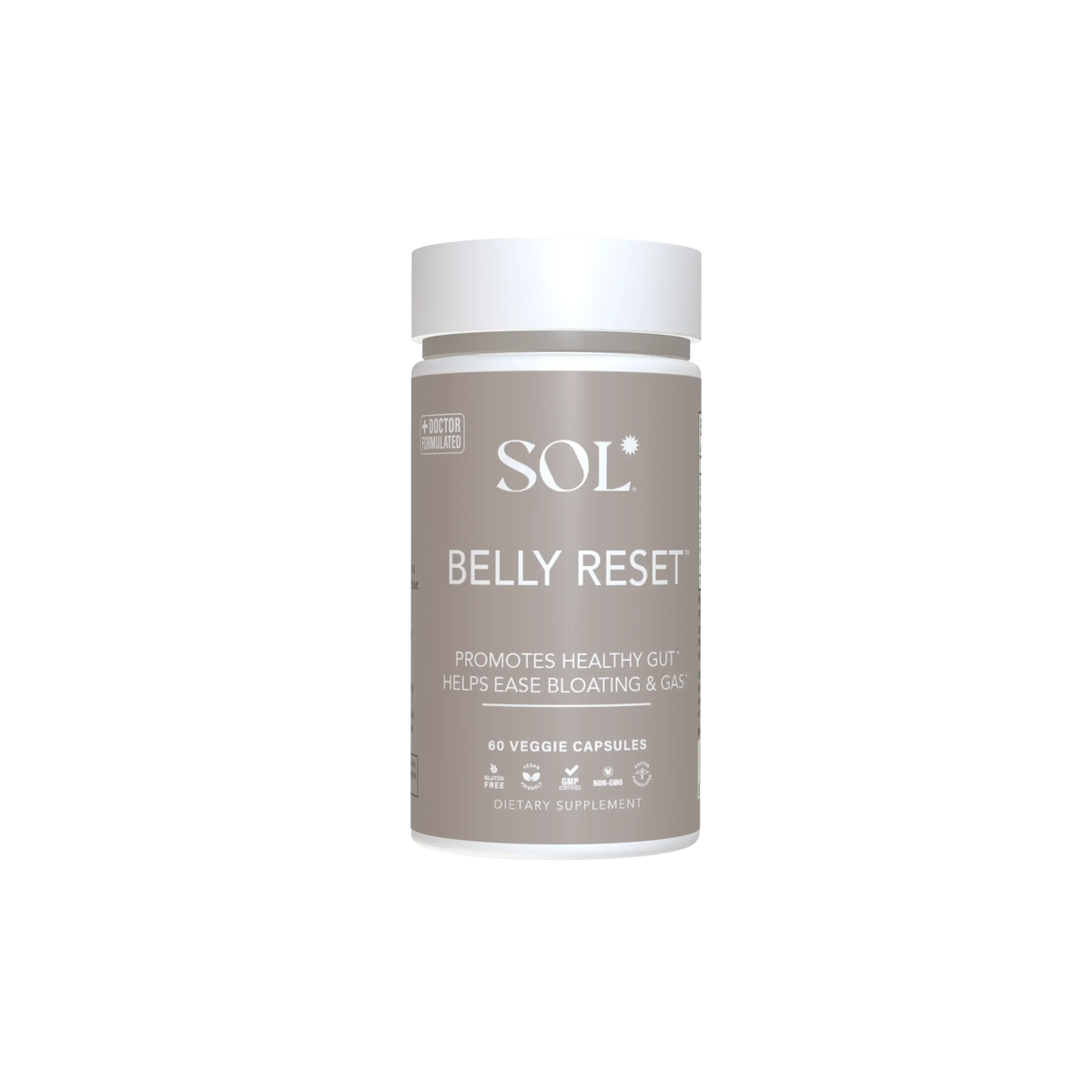
The best prebiotic supplements feed the bacteria already living in your gut — fiber-based options like inulin and partially hydrolyzed guar gum lead the list, with herbal gut-comfort formulas like Belly Reset and Time To Go as the support layer that keeps digestion comfortable while the microbiome adapts.
- Prebiotics are food for your existing gut bacteria; probiotics add new bacteria.
- Start low and go slow — a full dose on day one is the fastest route to bloating.
- Inulin, PHGG and resistant starch are the best-studied fiber prebiotics.
- Herbal formulas like Belly Reset and Time To Go pair well for comfort and regularity.
- Consistency over 4-8 weeks matters more than which fiber you pick.
Prebiotic vs probiotic: the 10-second version
A probiotic adds live bacteria; a prebiotic feeds the trillions already resident in your colon. Because your resident microbes are already adapted to you, feeding them is often the higher-leverage move — they are the ones producing the short-chain fatty acids that keep the gut lining healthy, and they cannot do it without substrate. Think of prebiotics as fertilizer and probiotics as new plants: a neglected garden gains more from the first.
The ranked prebiotic supplements
1. Inulin (chicory root fiber) — best overall value
The most studied prebiotic fiber, at the lowest cost per serving. Effective doses in research run 5-10 g daily. Start at 2-3 g with breakfast for the first week — inulin is famously gassy when introduced fast. It blends invisibly into coffee, oatmeal or a smoothie.
2. Partially hydrolyzed guar gum (PHGG) — best for sensitive guts
PHGG is the gentle option: low-FODMAP, nearly tasteless and markedly less fermentative gas than inulin. If IBS-style sensitivity or bloating has burned you on fiber before, this is the starting point. Typical dose 3-5 g daily, well tolerated at that level.
3. Resistant starch — best from real food
Cooled-and-reheated potatoes and rice, green bananas, oats and legumes all carry starch your small intestine cannot digest but your colon flora ferment happily. Free, effective and easy to cycle — though doses are less precise than a powder.
4. Polyphenol prebiotics — best supporting act
Compounds in berries, green tea, cocoa and olive oil feed specific beneficial species. You get them from food anyway; supplements here are a marginal add rather than a foundation.
5. The gut-comfort layer — where herbal formulas fit
Raising fiber changes stool frequency and fermentation for the first couple of weeks, and comfort during that window decides whether people persist. This is the layer Sol Nutrition's formulas occupy:
- Belly Reset ($36.99) supports digestion, eases bloating and helps restore gut balance — a natural companion while a new prebiotic settles in.
- Time To Go ($35.99) is a gentle herbal formula for regularity, aimed at the constipation-and-bloat pattern that extra fiber can aggravate before it improves.
A practical stack: your prebiotic powder at breakfast, Belly Reset with meals during the adaptation weeks, Time To Go only on stuck days. Comfort and feedstock are two different jobs, and covering both is what makes an 8-week prebiotic trial actually reach week eight.
How to start without the bloat
| Week | Prebiotic dose | Notes |
|---|---|---|
| 1 | 25% of target dose | With breakfast, plenty of water |
| 2-3 | 50-75% | Expect some extra gas — it is fermentation, not a problem |
| 4+ | Full dose | Most adaptation happens here |
| Week 8 | Assess | Bowel regularity, bloating, energy |
What to skip
- Prebiotic sodas as your sole fiber source — they carry 2-5 g per can, which is a rounding error against the 25-38 g daily fiber target.
- Fiber megadoses on day one — the 20 g of inulin in one sitting is how prebiotics get a bad name.
- XOS/GOS blends with proprietary claims and no dose labels — if the label hides the grams, you cannot titrate.
- Expecting a prebiotic to fix everything. Sleep, stress and overall diet diversity move the microbiome as much as any powder.
Related questions
How long until prebiotics work?
Bowel-habit changes show up in days to two weeks; the deeper shifts in microbial composition and short-chain fatty acid production build over 4-8 weeks of daily use.
Can you take prebiotics and probiotics together?
Yes — that combination is called a synbiotic, and the prebiotic helps the newly arrived strains establish. There is no conflict; if anything, the prebiotic improves the probiotic's odds.
Do prebiotics cause bloating?
Usually only in the first one or two weeks, and mostly with inulin-type fibers at high starting doses. Halve the dose, increase water, and step up more slowly — or switch to PHGG, which is notably gentler.
Are prebiotic foods enough without supplements?
For many people, yes — garlic, onions, leeks, asparagus, oats, apples and legumes are all prebiotic. Supplements earn their place when diet diversity is limited, appetite is small, or a specific regularity goal needs precise dosing.
What is the best time to take a prebiotic?
With or without food both work; taking it with breakfast tends to anchor the habit, and splitting larger doses across two meals reduces gas.
One last thing
The prebiotic market oversells novelty and undersells consistency. Pick one fiber, start at a quarter dose, hold the schedule for eight weeks, and judge by three markers: morning regularity, afternoon bloat, and how your stomach feels after dinner. If week eight feels no different, the fiber was not your bottleneck — and that is a genuinely useful result, because it points you toward sleep, stress or diet diversity instead.
FAQ
What is the best prebiotic supplement in 2026?
For most people, inulin for value or PHGG for sensitive stomachs. Both have real dosing research; pick by gut sensitivity, not marketing.
How long does it take for prebiotics to work?
Bowel-habit changes within 1-2 weeks; measurable microbiome shifts over 4-8 weeks of consistent daily use.
Can I take a prebiotic with my probiotic?
Yes — the pairing is called a synbiotic and gives new strains something to eat on arrival.
Why did prebiotics give me gas?
Rapid fermentation by your gut bacteria. Reduce the dose, add water, step up weekly — or choose PHGG, which produces notably less gas.
Do herbal gut formulas work with prebiotics?
They cover a different layer: comfort and regularity while the fiber does its work. Belly Reset and Time To Go are commonly used alongside a prebiotic during the adaptation window.
Related guides
- Best liquid gut health supplements for easy digestion
- Best gut health supplements for bloating and digestion


Share:
How to reduce bloating naturally after eating (2026 guide)
Ashwagandha Supplements for Stress and Cortisol Balance (2026): What the Evidence Shows