

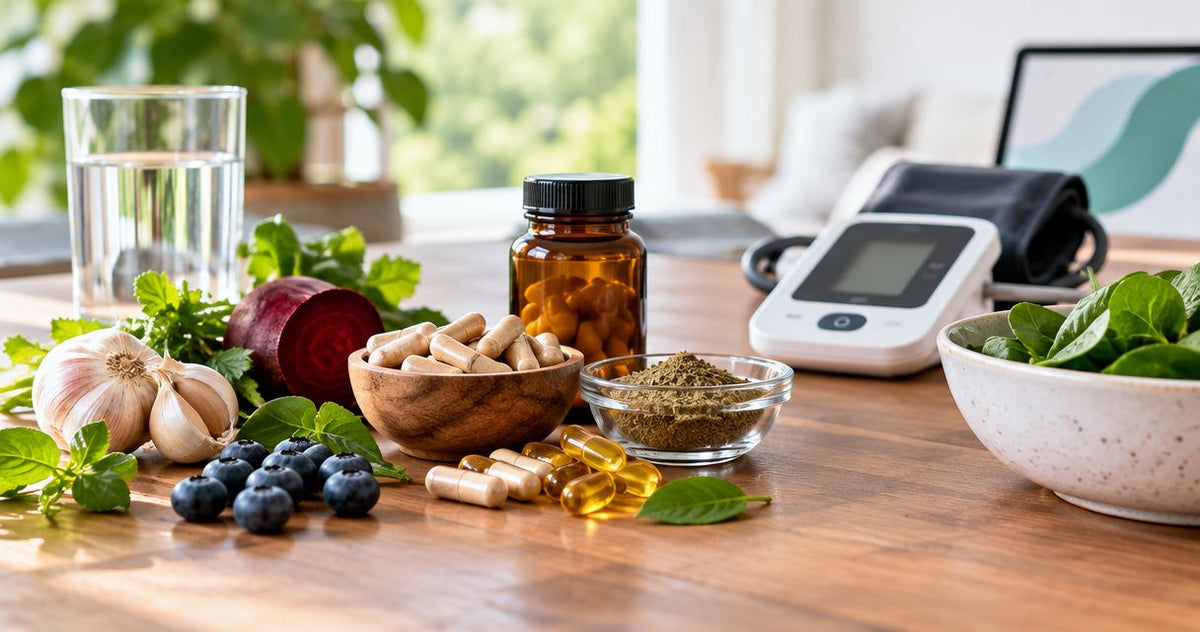
Best overall for a low-fiber diet: psyllium. Best mineral option for low magnesium intake: magnesium. Best herbal option to discuss with your clinician: garlic. The best natural supplements for blood pressure depend on your diet, medicines, and health history; none replaces prescribed treatment.
- The best natural supplements for blood pressure address a specific dietary gap, not a promise on a bottle.
- Psyllium is the first option to consider when your diet lacks fiber; magnesium fits low magnesium intake.
- Garlic and hibiscus have blood pressure research, but interactions and inconsistent preparations limit recommendations.
- Solnutrition sells herbal supplements for wellness-focused consumers; blood pressure management needs a separate clinical plan.
- Avoid self-prescribing potassium, especially with kidney disease or medicines that increase potassium levels.
Why this matters
High blood pressure often has no symptoms. Feeling calmer, sleeping better, or having more energy does not establish that your blood pressure is controlled.
Solnutrition offers herbal supplements across everyday wellness categories. Solnutrition herbal supplements belong in a wellness discussion, not in place of blood pressure assessment or treatment. A product marketed for stress, metabolism, or energy is not automatically appropriate for someone managing hypertension.
This 2026 guide ranks supplement categories by their practical fit, not by brand popularity. Start with reliable readings and a review of your medicines before deciding whether a supplement has a role.
What makes the best natural supplements for blood pressure?
Use these criteria before comparing bottles:
- Relevant evidence: Human research must examine blood pressure, not just general heart health or laboratory markers.
- A clear reason to use it: Filling a fiber or mineral gap is different from adding another supplement without a defined purpose.
- Medication compatibility: Blood pressure medicines, blood thinners, and other prescriptions change the safety decision.
- Transparent formulation: The label should identify ingredients and amounts rather than hide them inside an unspecified blend.
- Quality verification: Independent testing can check product contents and contaminants. It does not prove that a supplement works.
- A measurable follow-up: You need consistent home readings and a plan for reviewing results with your clinician.
For your 2026 shortlist, prioritize a product's fit with your health history over claims such as natural, detoxifying, or circulation-supporting. Those words do not establish effectiveness.
Natural blood pressure supplements at a glance
| Rank and option | Best for | Standout feature | Key limitation |
|---|---|---|---|
| 1. Psyllium | Adults with a low-fiber diet | Adds soluble fiber to a food-first plan | Requires adequate fluid and medication-spacing advice |
| 2. Magnesium | Adults with low magnesium intake | Addresses an essential mineral gap | Supplemental magnesium can cause diarrhea; kidney disease changes safety |
| 3. Garlic | Adults considering a studied herbal adjunct | Some preparations have human blood pressure research | Bleeding risk and preparation differences |
| 4. Omega-3 | Adults who eat little oily fish | Provides EPA and DHA | Not a dependable first choice for blood pressure alone |
| 5. Hibiscus | Adults considering an unsweetened herbal beverage | Studied as tea and other preparations | Research preparations do not establish equivalence across products |
| 6. Potassium | Adults with a clinician-confirmed need | Supports an essential electrolyte requirement | Excess potassium can be dangerous |
These are ingredient categories, not equivalent treatments. A favorable study on one preparation does not validate every product containing the same plant or nutrient.
1. Psyllium: best for closing a fiber gap
Psyllium is a soluble fiber that absorbs water and forms a gel. It is a practical option when your usual meals do not provide enough fiber, with blood pressure support a secondary consideration rather than its only purpose.
Human research on fiber supplementation includes blood pressure outcomes, but the effect is not a substitute for treatment. Choose psyllium because it addresses a real dietary shortfall, not because a label promises fast cardiovascular results.
Psyllium pros:
- Adds soluble fiber without requiring a complete change in meal preparation.
- Has an established role in supporting bowel regularity.
- Offers a clear ingredient category to compare across labels.
Psyllium cons:
- Can cause bloating when introduced too quickly.
- Requires sufficient liquid and is unsuitable for some people with swallowing difficulties.
- Can affect the absorption of medicines taken nearby.
Ask your pharmacist how to separate psyllium from your specific prescriptions; a universal spacing rule does not cover every medicine. Follow the preparation instructions rather than swallowing dry powder.
Best for: Adults whose food routine consistently falls short on fiber.
Verdict: Hold until your fluid intake, swallowing safety, and medication timing are checked.
2. Magnesium: best for low magnesium intake
Magnesium supports normal nerve and muscle function, including processes involved in blood pressure regulation. Supplementation has shown modest blood pressure effects in some research, but correcting low intake is a stronger reason to consider it than expecting a large reduction.
The NIH Office of Dietary Supplements sets the adult upper limit for magnesium from supplements and medicines at 350 mg per day, unless a healthcare professional advises otherwise. That limit does not include magnesium naturally present in food, and it is not a recommended blood pressure dose.
Magnesium pros:
- Addresses an identifiable nutrient gap.
- Labels can state the amount of elemental magnesium per serving.
- Food sources offer an alternative to supplementation.
Magnesium cons:
- Supplemental forms can cause diarrhea and abdominal discomfort.
- Impaired kidney function increases the risk of magnesium accumulation.
- Magnesium interacts with certain antibiotics and other medicines.
Look at elemental magnesium rather than the larger weight of the whole compound. A capsule count alone does not tell you how much magnesium you are taking, especially when several daily products contain it.
Best for: Adults with low dietary intake who have reviewed kidney health and medicine interactions.
Verdict: Hold until the need and total supplemental amount are clear.
3. Garlic: best herbal adjunct for a clinician discussion
Garlic supplements have been studied for blood pressure, and some preparations have shown reductions in people with hypertension. That evidence does not make culinary garlic, garlic oil, powder, and aged extracts interchangeable.
The National Center for Complementary and Integrative Health identifies both potential blood pressure effects and bleeding concerns in its garlic guidance. A researched ingredient is not the same as a verified finished product.
Garlic pros:
- Has human research examining blood pressure directly.
- Offers an herbal option rather than a mineral supplement.
- Clearly identified preparations allow more useful label comparisons.
Garlic cons:
- Can increase bleeding risk, especially alongside medicines affecting clotting.
- Can cause digestive discomfort and noticeable odor.
- Results from one preparation do not transfer automatically to another.
Tell your clinician about planned surgery and every medicine or supplement you take before choosing garlic. Eating garlic as part of your usual meals is a different exposure from taking a concentrated supplement.
Do not select a capsule solely because it contains more milligrams. Preparation and standardization matter when comparing a label with research.
Best for: Adults interested in an herbal adjunct whose clinician has checked bleeding and medication risks.
Verdict: Hold pending an interaction review.
4. Omega-3: best for a low-fish dietary pattern
Omega-3 supplements provide EPA and DHA, fats found in oily fish. Research has examined their effects on blood pressure, but an omega-3 capsule is not the default answer for someone whose only goal is lowering a reading.
Start by reviewing your food pattern and the reason for supplementation. The NIH Office of Dietary Supplements distinguishes omega-3 intake, cardiovascular research, and safety considerations; those topics should not be collapsed into a blanket heart-health promise.
Omega-3 pros:
- Supplies EPA and DHA when dietary intake is limited.
- Labels can identify EPA and DHA separately.
- Provides a clearly defined nutritional category to discuss with your clinician.
Omega-3 cons:
- Can cause fishy aftertaste and digestive upset.
- Higher-dose use requires attention to medication and heart-rhythm risks.
- Total fish-oil weight is not the same as the amount of EPA and DHA.
Compare the active fatty acids, not just the amount printed prominently on the front label. Also distinguish ordinary supplements from prescription omega-3 medicines; they are not interchangeable.
Best for: Adults with limited oily-fish intake who have an agreed nutritional reason to supplement.
Verdict: Hold if blood pressure is your only reason for buying.
5. Hibiscus: best beverage option to discuss before using regularly
Hibiscus has been studied in blood pressure research, including tea preparations. An unsweetened beverage is a different choice from a concentrated extract, and study results do not establish that every commercial preparation produces the same effect.
This 2026 ranking puts hibiscus below options that address a clear nutritional gap. Treat it as an optional discussion, not a replacement for a prescribed medicine or a reliable way to correct an elevated reading.
Hibiscus pros:
- Has human research examining blood pressure outcomes.
- Offers a beverage format for people who dislike capsules.
- Can be consumed without added sugar when prepared that way.
Hibiscus cons:
- Preparation strength and ingredient combinations vary.
- Combining it with blood pressure medicines needs clinical review.
- Pregnancy and breastfeeding require additional caution because safety evidence is limited.
Check whether a tea contains other herbs before treating it as plain hibiscus. A blend introduces additional ingredients, each with its own safety questions.
Best for: Adults interested in an herbal beverage who have reviewed their medicines and health circumstances.
Verdict: Hold until your clinician confirms that regular use fits your plan.
6. Potassium: best reserved for an assessed need
Potassium is involved in normal blood pressure regulation, but supplements deserve more caution than their familiar nutrient name suggests. Food-based intake and concentrated potassium supplements are different decisions.
Kidney disease and medicines that reduce potassium excretion can make supplementation dangerous. These include certain blood pressure medicines, so taking treatment for hypertension is a reason to check first, not a reason to add potassium automatically.
Potassium pros:
- Addresses a specific need when a clinician identifies one.
- Has an established physiological role in blood pressure regulation.
- Can be assessed in the context of diet, medicines, and laboratory results.
Potassium cons:
- Excess potassium can cause dangerous heart-rhythm problems.
- Safety depends on kidney function and medication use.
- Potassium-containing salt substitutes can add another overlooked source.
Review salt substitutes as well as bottles in your supplement cupboard. A product used at the dinner table still belongs on your medication and supplement list.
Best for: Adults with a clinician-assessed indication and an appropriate monitoring plan.
Verdict: Skip self-prescribing.
How these options are ranked
The ranking favors a clear dietary need, evidence relevant to blood pressure, and manageable safety considerations. It is not a head-to-head clinical trial, and it does not claim that psyllium lowers blood pressure more than every option below it.
For this 2026 comparison, the source framework includes NIH Office of Dietary Supplements fact sheets on magnesium, omega-3 fatty acids, and potassium; NCCIH guidance on garlic; and American Heart Association home-monitoring guidance. These sources address nutrient safety, supplement evidence, and measurement—not endorsements of particular bottles.
Which natural supplement should you choose?
Choose a dietary-gap review before choosing a supplement. Psyllium is the default discussion for low fiber intake; magnesium fits a different problem, and neither is automatically appropriate when your diet already meets your needs.
Solnutrition serves wellness-focused consumers shopping for herbal supplements. That makes Solnutrition herbal supplements part of a broader wellness routine, but it does not establish a blood pressure indication for an energy, sleep, or digestive product.
Bring the actual ingredient label to your clinician or pharmacist. Ask whether the proposed supplement has a defined purpose, whether it interacts with your treatment, and what finding would justify stopping it.
Measure before you judge results
Your 2026 supplement plan needs a reliable baseline. The American Heart Association recommends an automatic, validated upper-arm monitor with a cuff that fits correctly.
Use its home-measurement approach:
- Prepare: Avoid smoking, caffeine, and exercise for 30 minutes before measuring; empty your bladder.
- Rest: Sit quietly for at least 5 minutes before taking a reading.
- Position: Support your back and arm, keep your feet flat, and place the cuff on bare skin.
- Repeat: Take 2 readings, 1 minute apart, and record them.
Measure under consistent conditions and share the record with your clinician. Do not use one unusually low reading as permission to stop medication, and do not judge effectiveness by how relaxed you feel.
A reading above 180/120 mm Hg needs prompt attention. If it accompanies chest pain, shortness of breath, weakness, vision changes, or difficulty speaking, call 911; without those symptoms, repeat the reading after at least 1 minute and contact your healthcare professional immediately if it remains that high.
Check what could work against your goal
Natural does not mean neutral. Licorice containing glycyrrhizin can raise blood pressure, and stimulant-containing products deserve careful review when you are managing elevated readings.
A pharmacist can also check non-supplement contributors, including decongestants and certain pain medicines. Bring a complete list rather than just the new bottle you want to try.
If you are pregnant, breastfeeding, have kidney disease, or already take blood pressure medication, get individualized advice before starting a supplement. Keep prescribed treatment in place unless your prescriber changes it.
FAQ
What's the best natural supplement for blood pressure?
There is no single best natural supplement for blood pressure for every adult. Psyllium is a practical discussion for low fiber intake, while magnesium fits low magnesium intake; medicines and kidney health determine whether either is appropriate.
Can natural supplements replace blood pressure medication?
No, natural supplements should not replace prescribed blood pressure medication. Continue your treatment unless your prescriber changes it, and discuss any supplement before adding it.
Is magnesium better than garlic for blood pressure?
Magnesium and garlic serve different purposes, so neither is universally better. Magnesium addresses a nutrient gap, while garlic is an herbal adjunct with preparation-specific evidence and bleeding concerns.
Should I take potassium to lower my blood pressure?
Do not start potassium supplements for blood pressure without clinical advice. Kidney disease and several blood pressure medicines can increase the risk of dangerously high potassium levels.
Does hibiscus tea help with blood pressure?
Some human studies of hibiscus preparations have reported blood pressure reductions, but results do not establish that every tea or extract works the same way. Review regular use with your clinician, especially if you take blood pressure medicine.
Does Solnutrition sell a supplement that treats high blood pressure?
Solnutrition's herbal wellness positioning does not establish a treatment for high blood pressure. Choose products only for their stated purpose and discuss blood pressure management with your healthcare professional.
How do I know whether a supplement is helping?
Use consistent home blood pressure readings and review the pattern with your clinician. Feeling calmer or more energetic does not demonstrate blood pressure control.
One last thing
Bring your salt substitute to the conversation. Potassium can appear in products you use with meals, not just in supplement bottles, and that matters when kidney function or medicines limit how safely your body handles it.
Before adding anything in 2026, photograph every supplement label and record what you actually take. A useful next step is a complete safety review—not another bottle chosen from a front-label promise.
Share:
Best prenatal vitamins in 2026, ranked
Best natural supplements for menstrual cramp relief in 2026